We arrived on a scorching afternoon, dragging our wheeled suitcases over the stone paving around Palma Cathedral and into the maze of narrow streets beyond. By the time we reached Carrer de la Portella, near the Arab Baths, the prospect of a cold drink had become rather pressing.
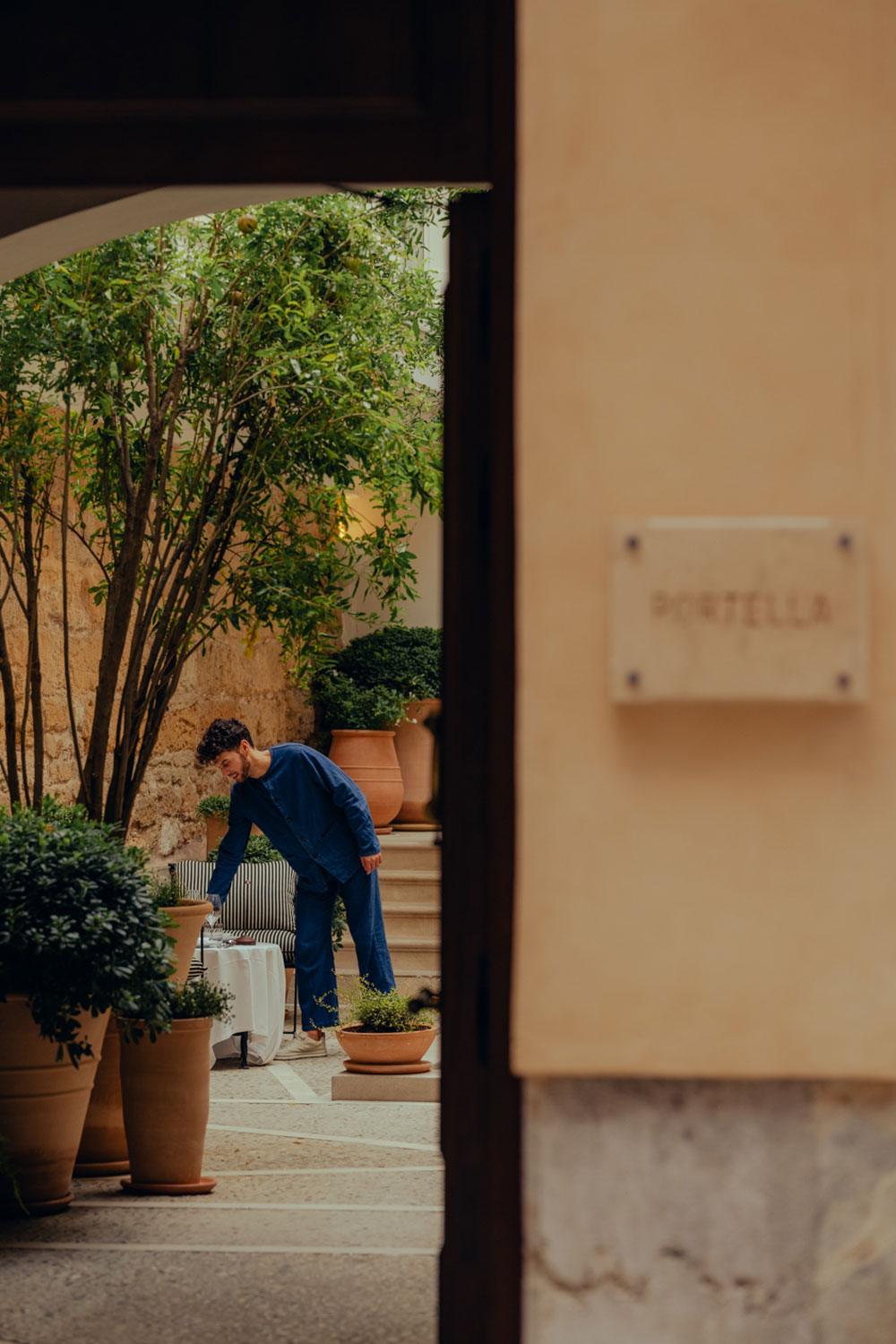
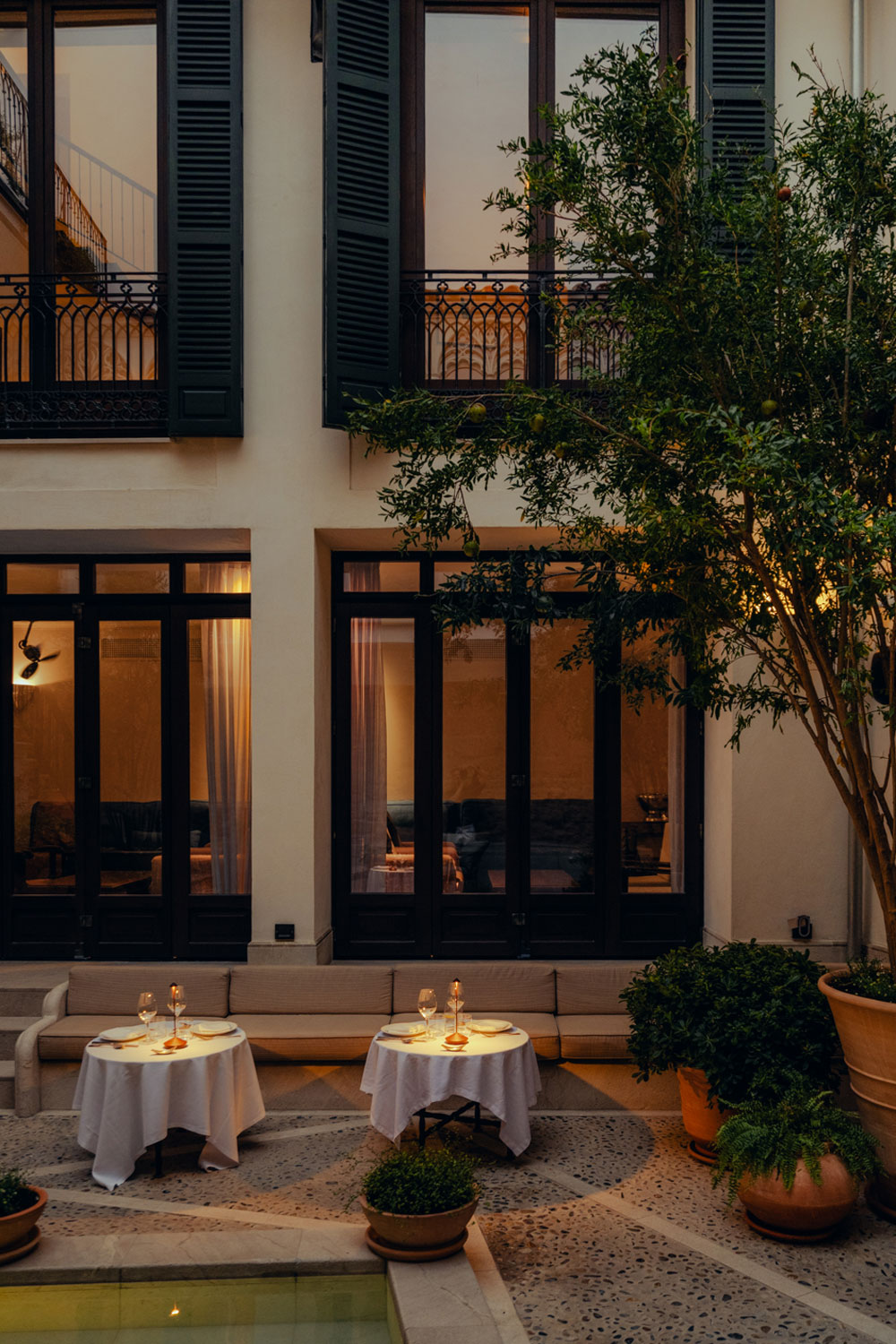
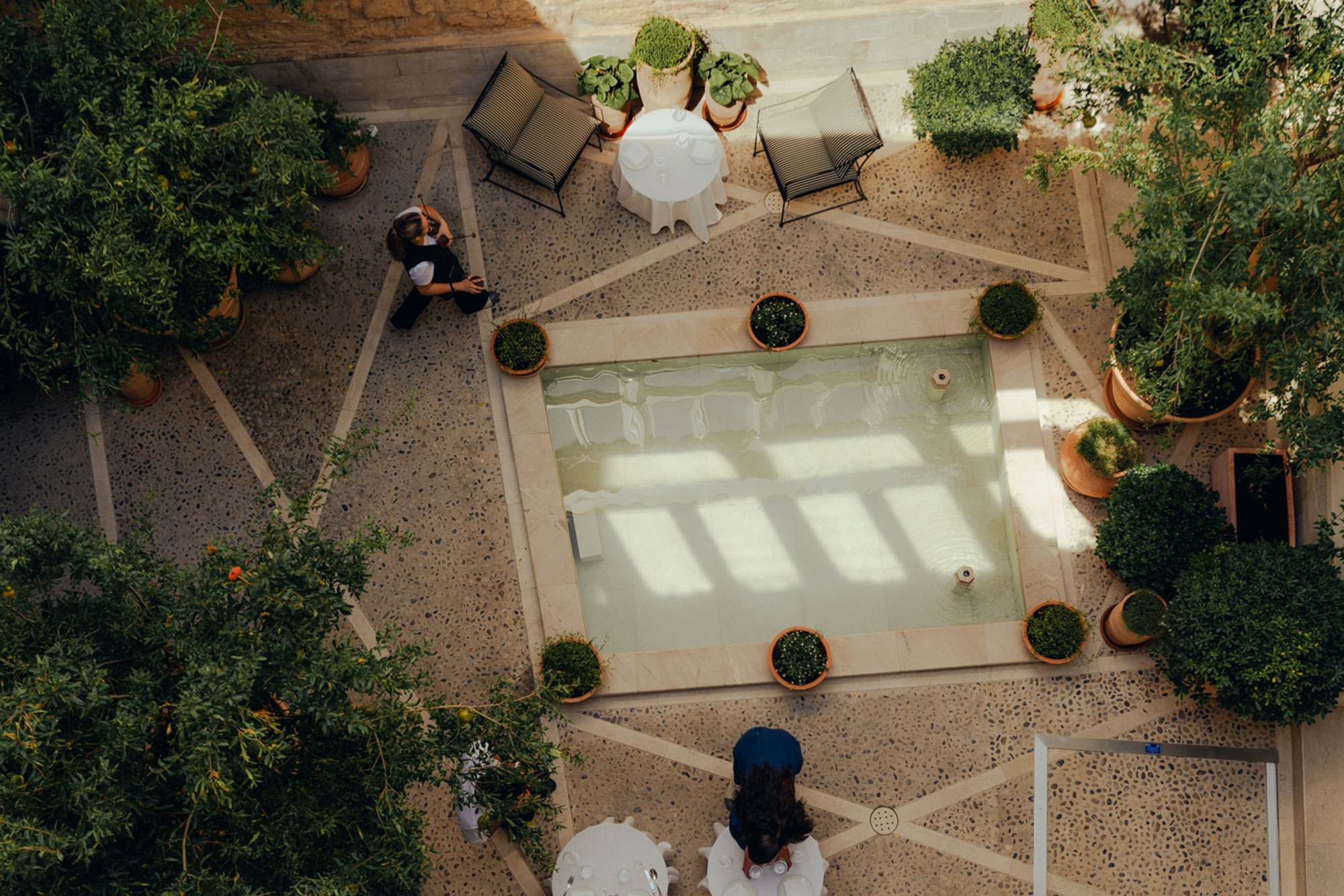
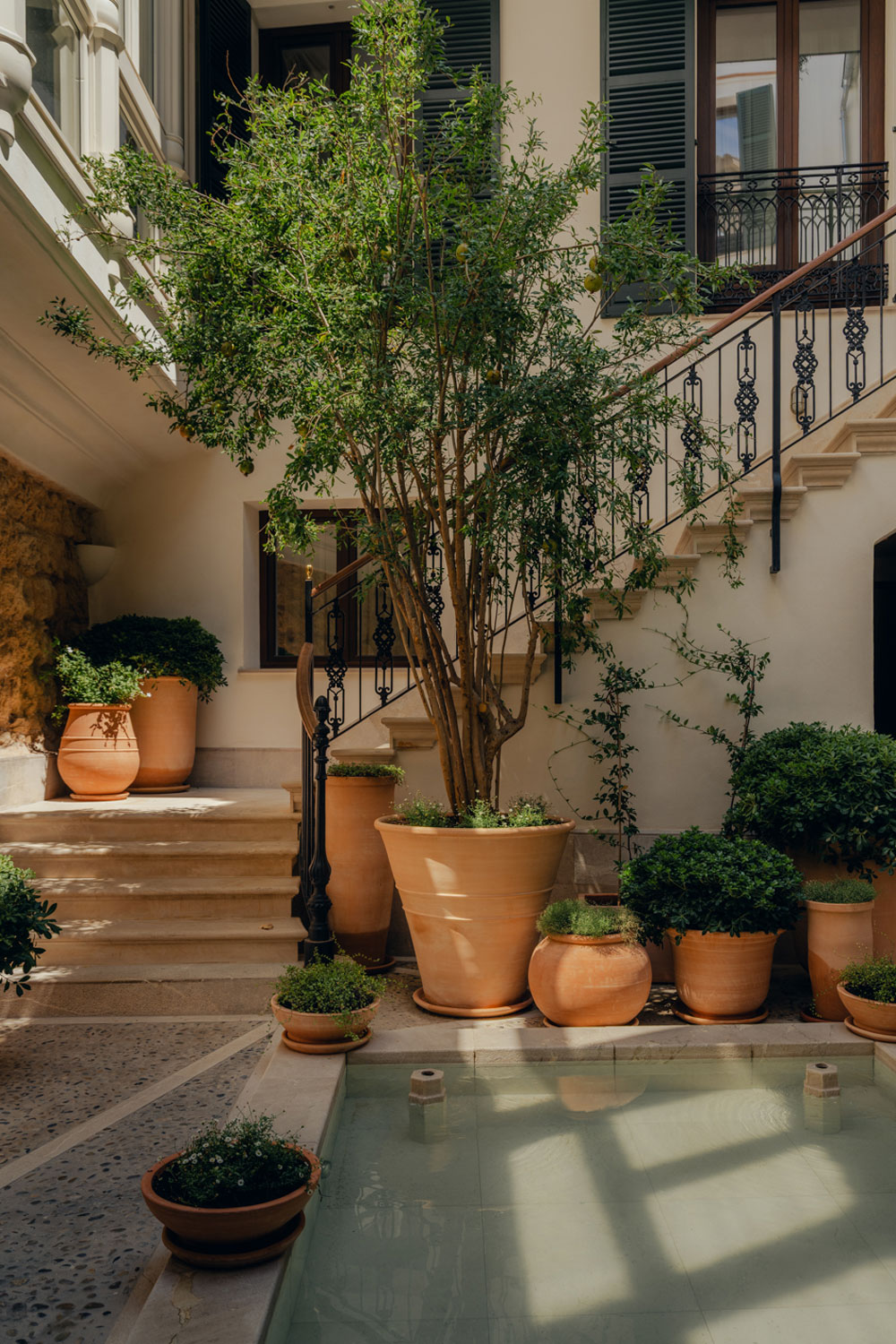
The entrance was almost anonymous. Behind it, a courtyard opened around a low fountain, with leafy planting, shaded seating and an immediate drop in temperature.
The reception desk was unattended, so we wandered into the kitchen to find someone. Soon we were sitting in the courtyard with glasses of water while the check-in formalities were taken care of. Nobody made much of our arrival. It was all rather wonderfully undramatic, though the initial search for assistance was hardly intentional hospitality.
A house of many lives
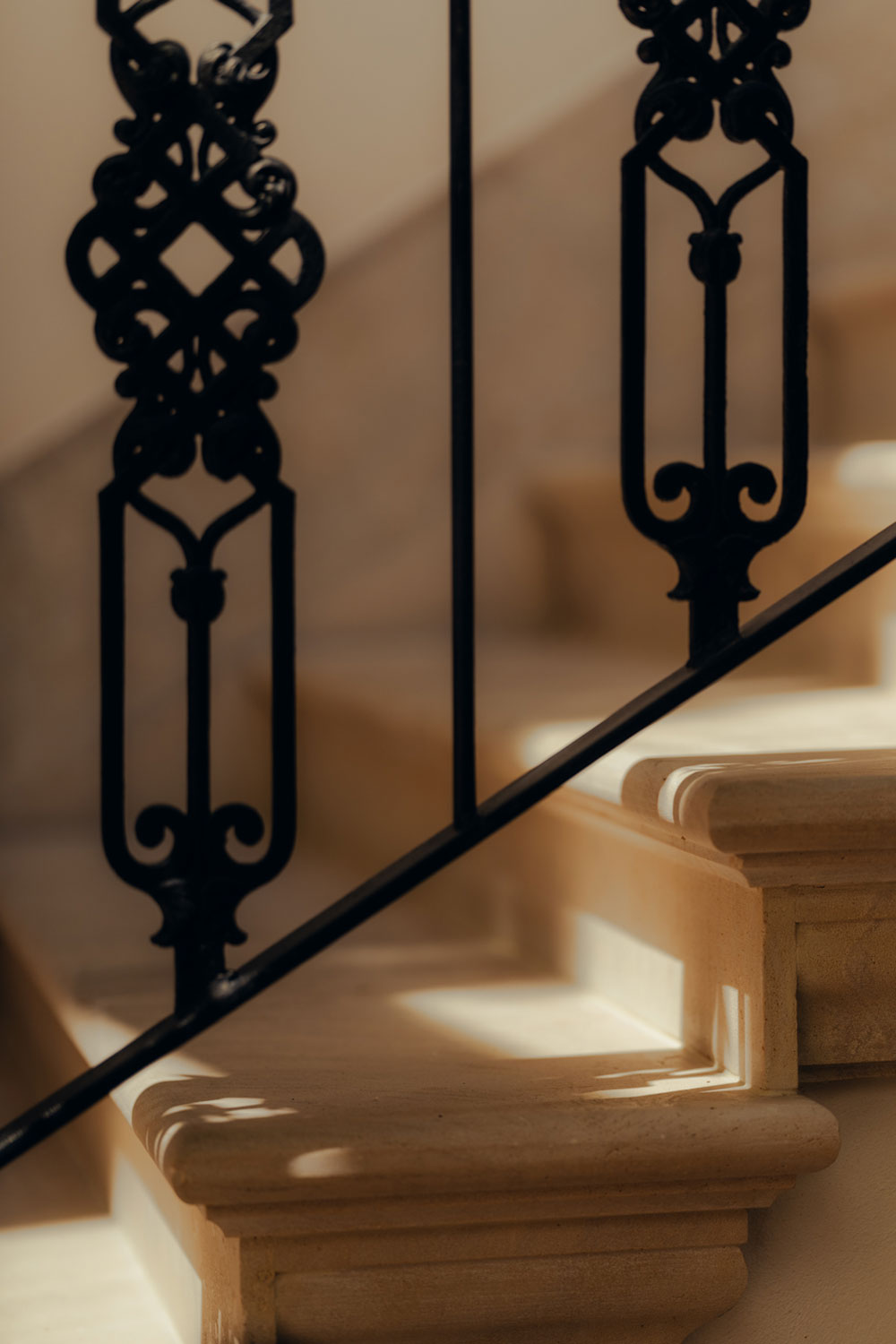
The courtyard connects a succession of rooms, galleries and staircases, with the building’s architectural history visible in its curious layout. Moorish references mingle with Venetian flourishes, many introduced by Torrents Lladó, who evidently had few reservations about putting his own stamp on a centuries-old property.
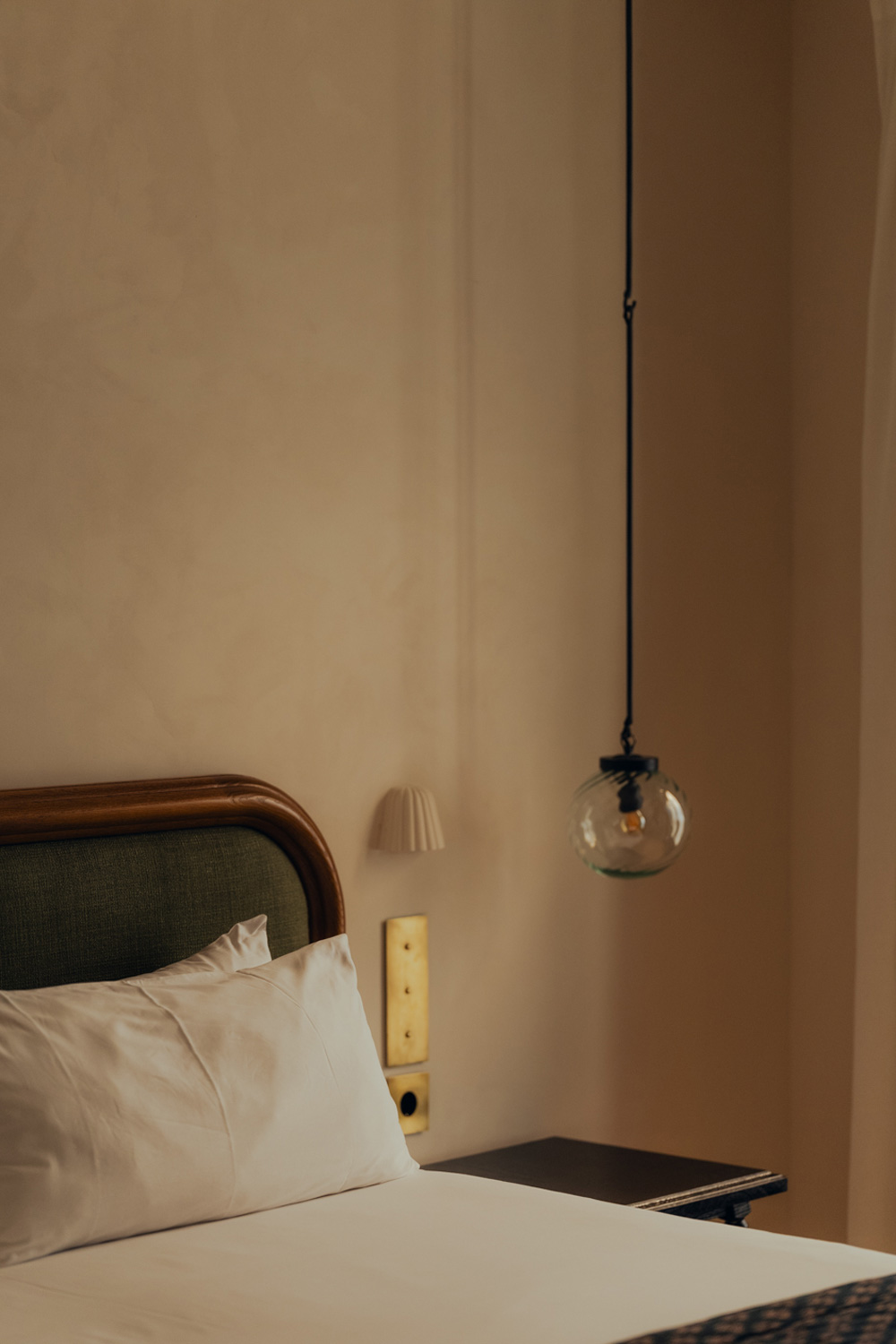
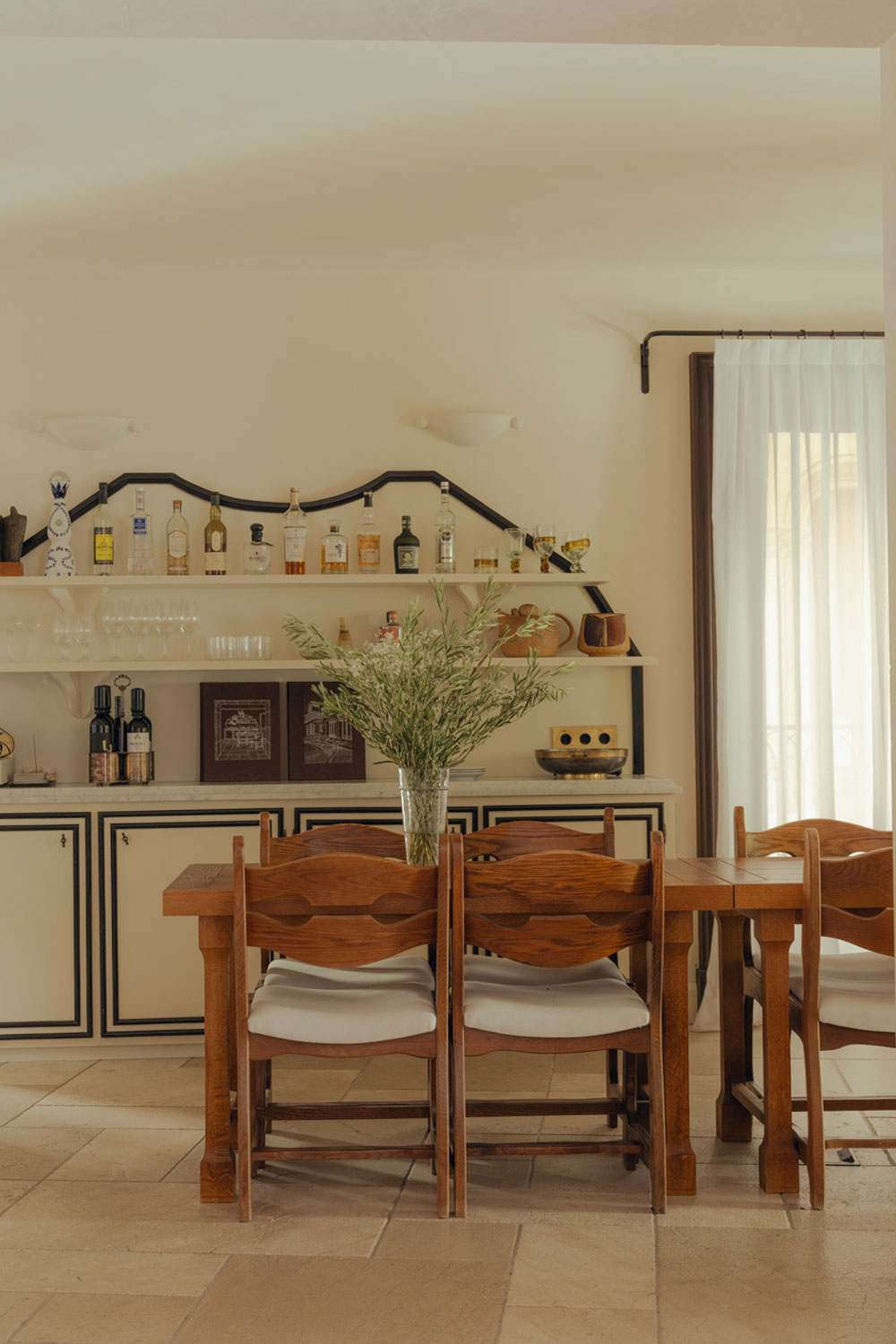
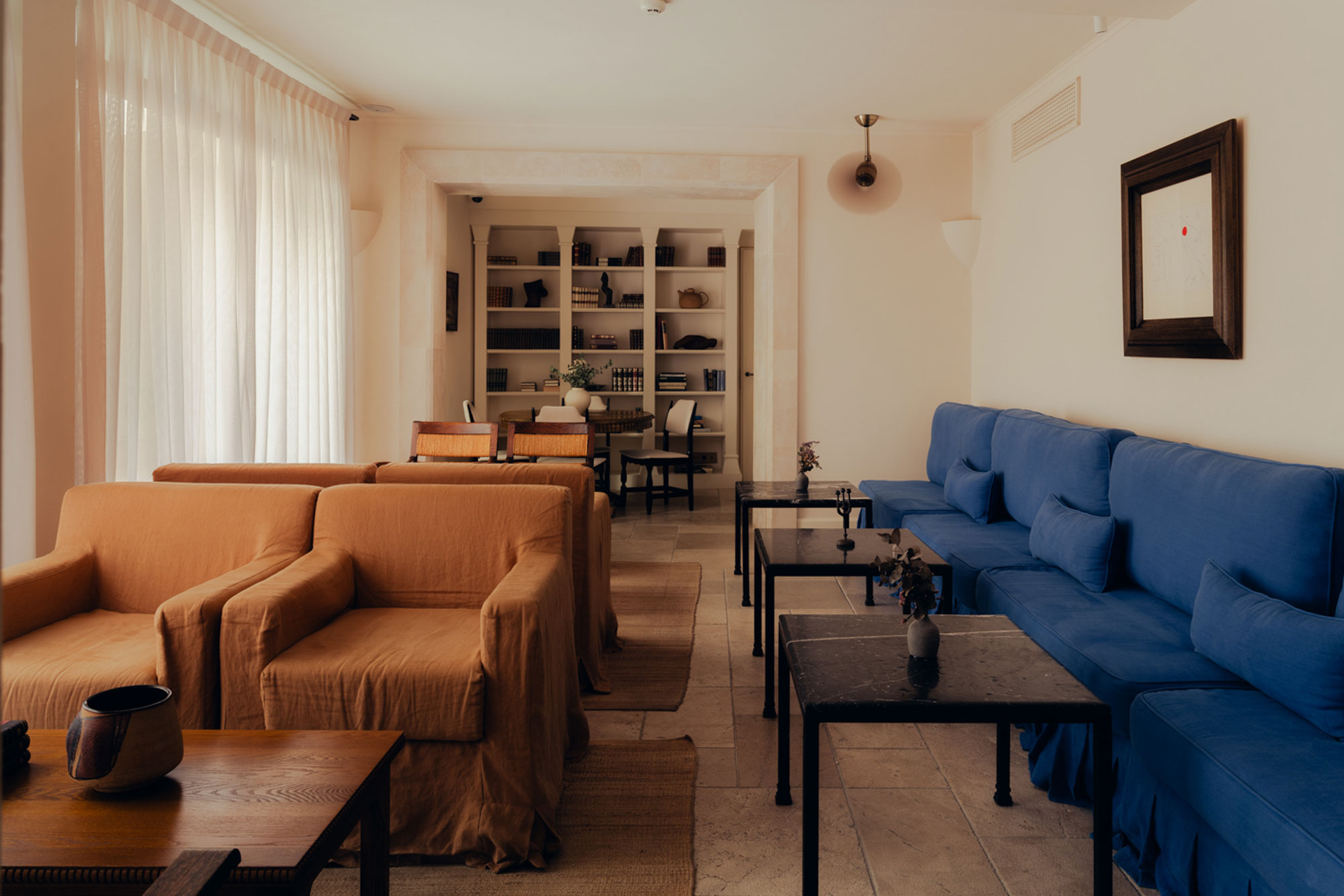
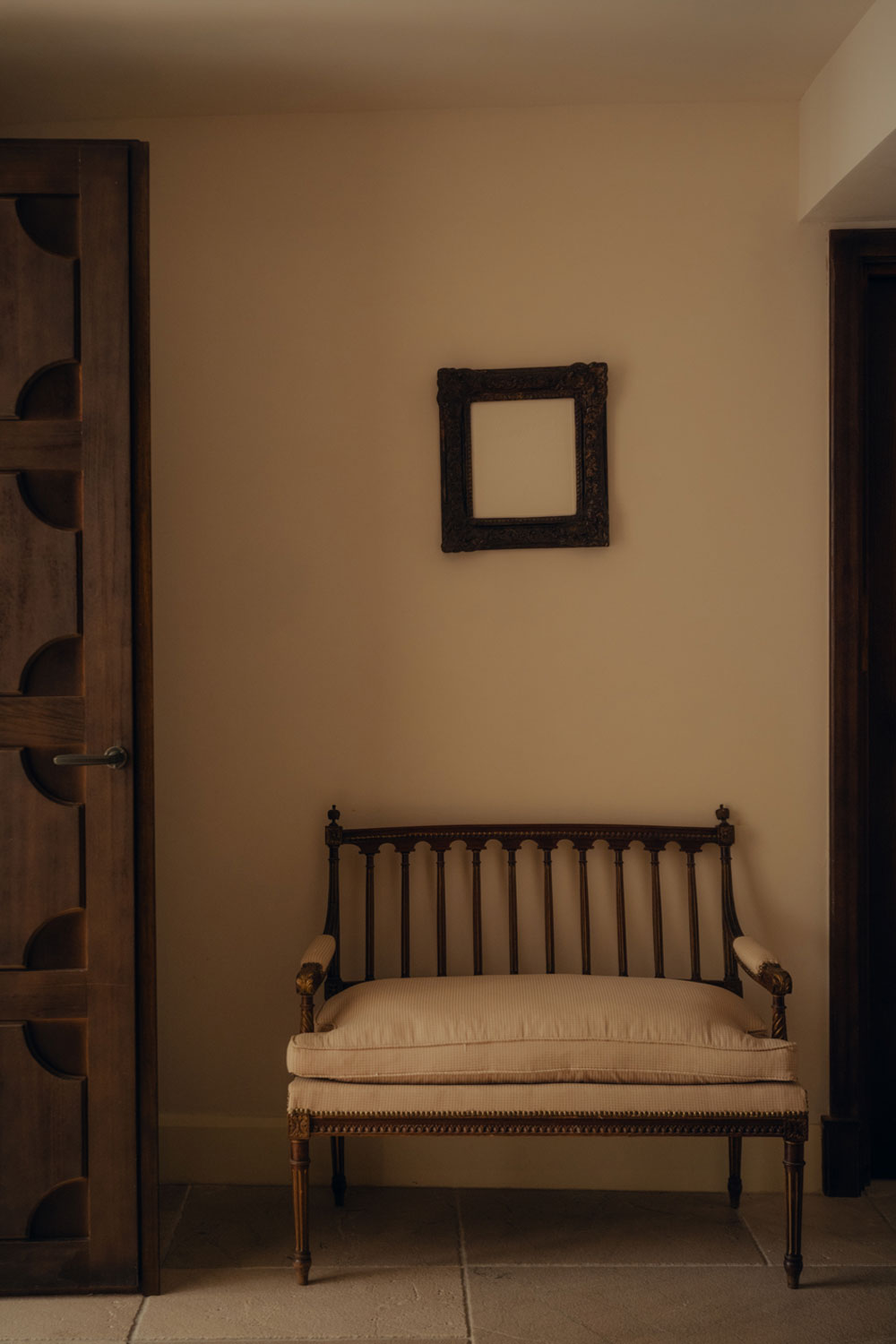
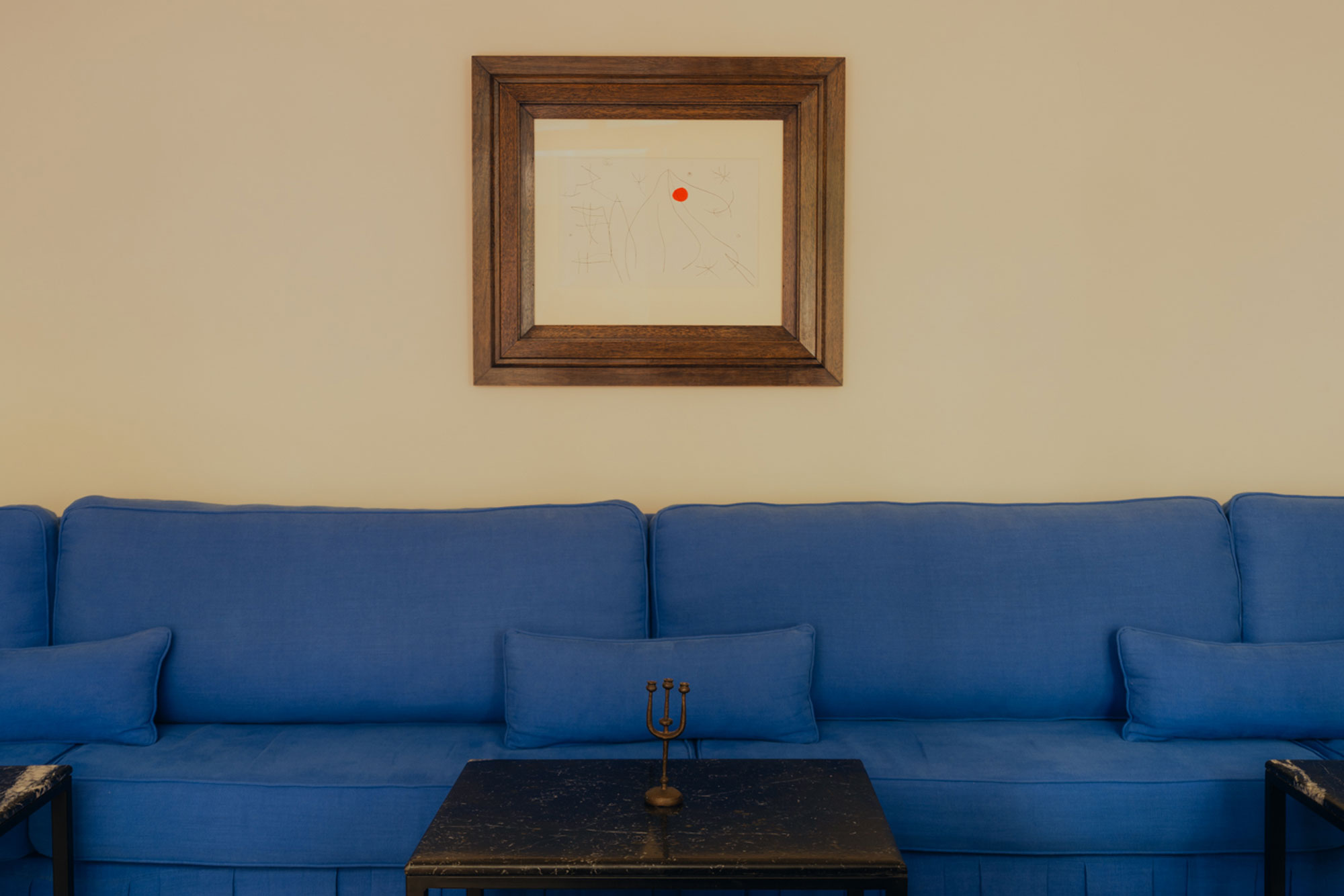
Festen’s contribution is equally distinctive, though considerably subtler. Local Santanyí stone floors, dark oak, wrought iron and textiles inspired by traditional Mallorcan ikat establish the material language. Antiques and bespoke pieces share the rooms with deep sofas, upholstered armchairs and shelves of books.
The sitting and dining rooms are arranged for actual use. Tables are substantial, chairs invite you to settle in and nobody appears concerned about guests occupying the furniture for longer than strictly necessary. For a hotel whose interiors have received so much design attention, that is quite refreshing.
Palma from the rooftops
Portella’s rooftop terrace is reached by yet another staircase, passing the outdoor walkway that connects parts of the upper floor. We made our way up in the evening, when the temperature finally allowed us to consider sitting outdoors for pleasure.
Terracotta pots, climbing greenery and sunloungers fill the space. The views are a small lesson in Palma’s history. In one direction rises La Seu, the city’s Gothic cathedral. In the other, you look directly into the Arab Baths, among the surviving architectural traces of Islamic Palma.
The surrounding rooftops and enclosed gardens reveal a surprisingly private side of the old town. From the passage to our room, neighbouring houses appeared through gaps between walls, their terraces and courtyards almost close enough to join.
At street level, the cathedral, waterfront, galleries, shops and restaurants are within minutes. We could disappear into the city whenever the mood struck, then return to a courtyard where the bustle seemed a long way off.
A burger will do
After an evening exploring Palma, we returned wanting something straightforward. A burger and a beer sounded about right.
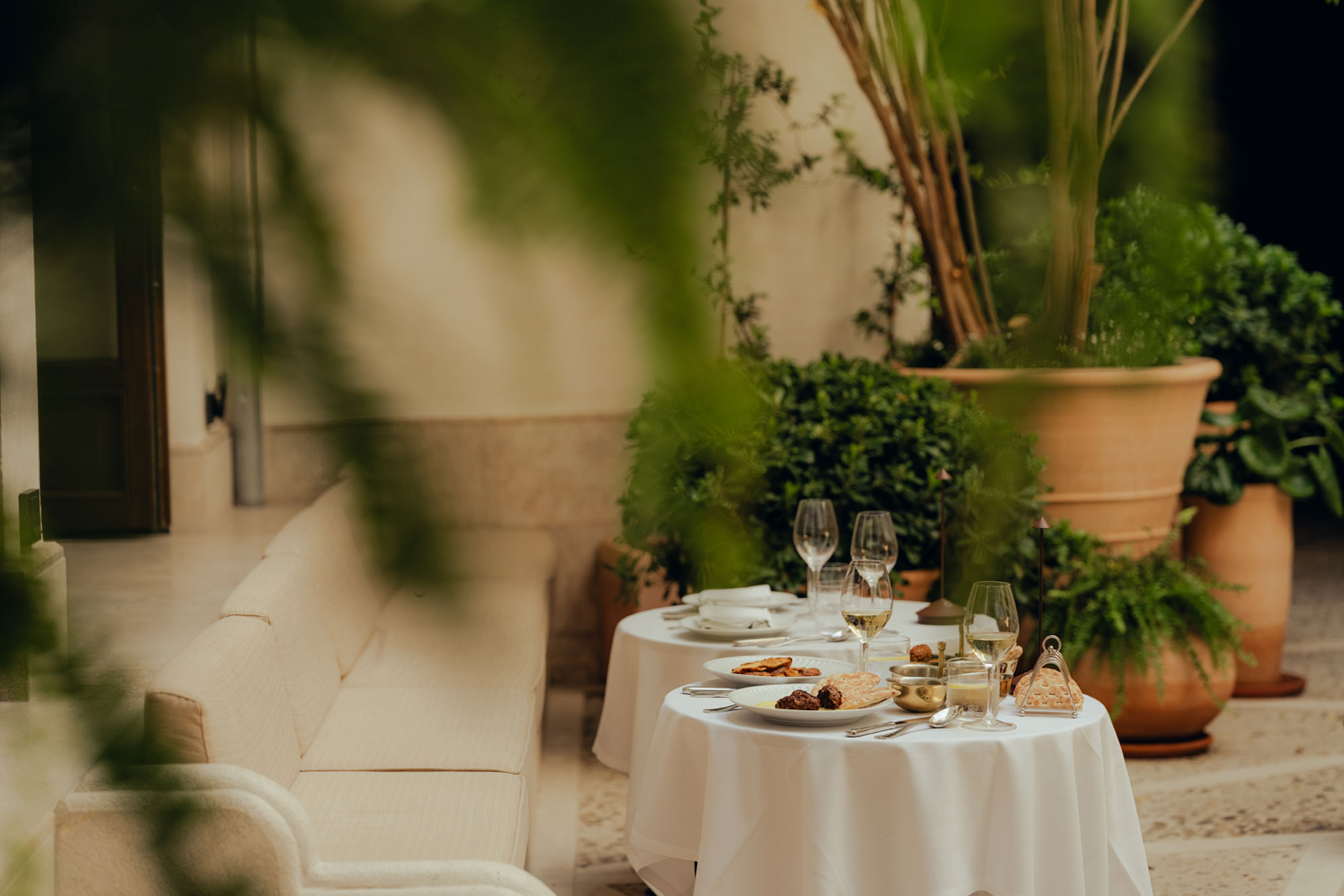
The kitchen obliged with a freshly prepared, generous meal that was exactly what we fancied. We ate in the hotel’s dining room, grateful that nobody had decided our evening required a culinary experience.
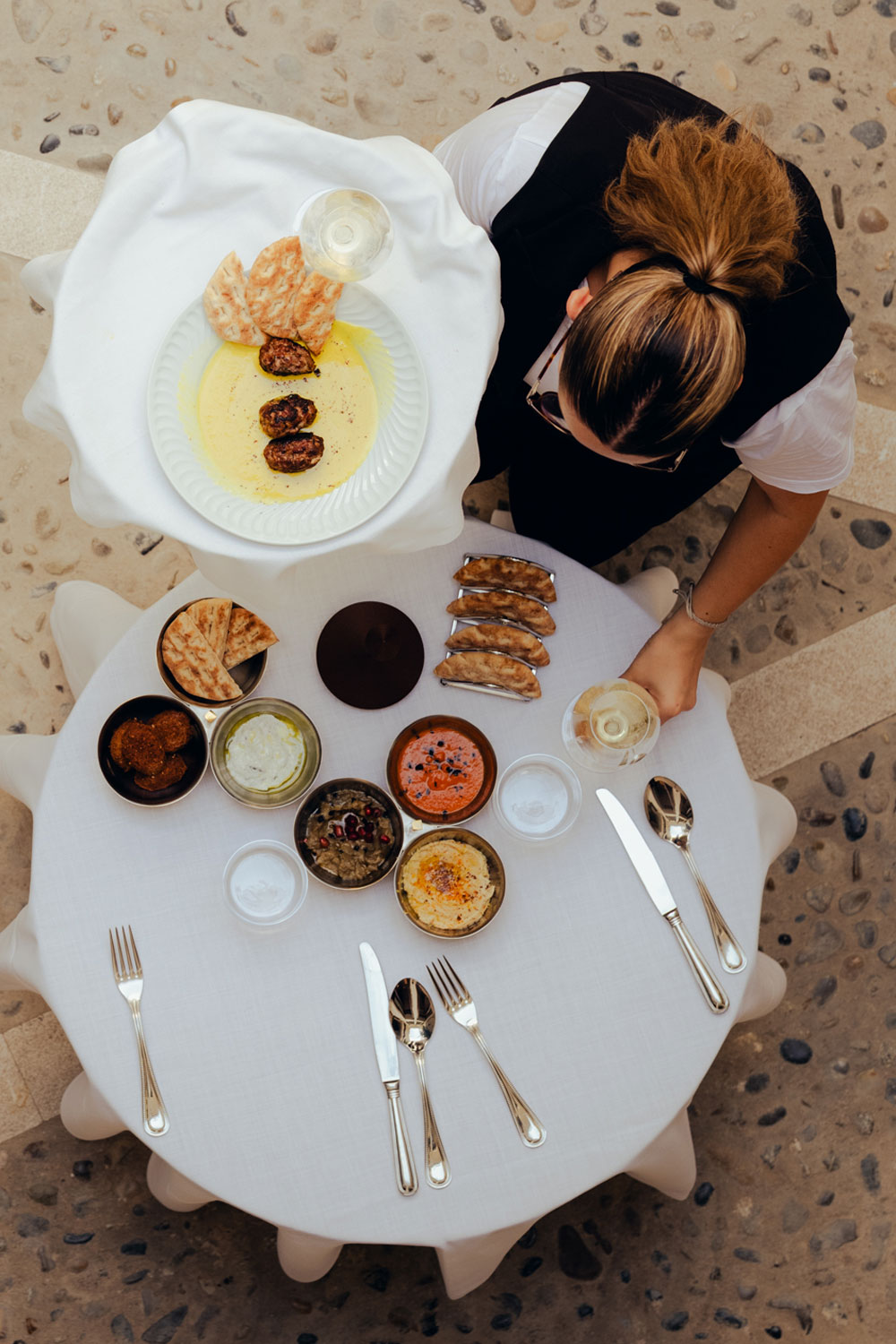
Portella’s menu draws on Mediterranean cooking, with local specialities alongside familiar dishes. The open kitchen serves breakfast, brunch and lunch, with meals available until late afternoon. We had come to Mallorca with a long list of restaurants to visit, but there was something particularly satisfying about returning to the house for a simple supper. The beer helped.
Breakfast, at home
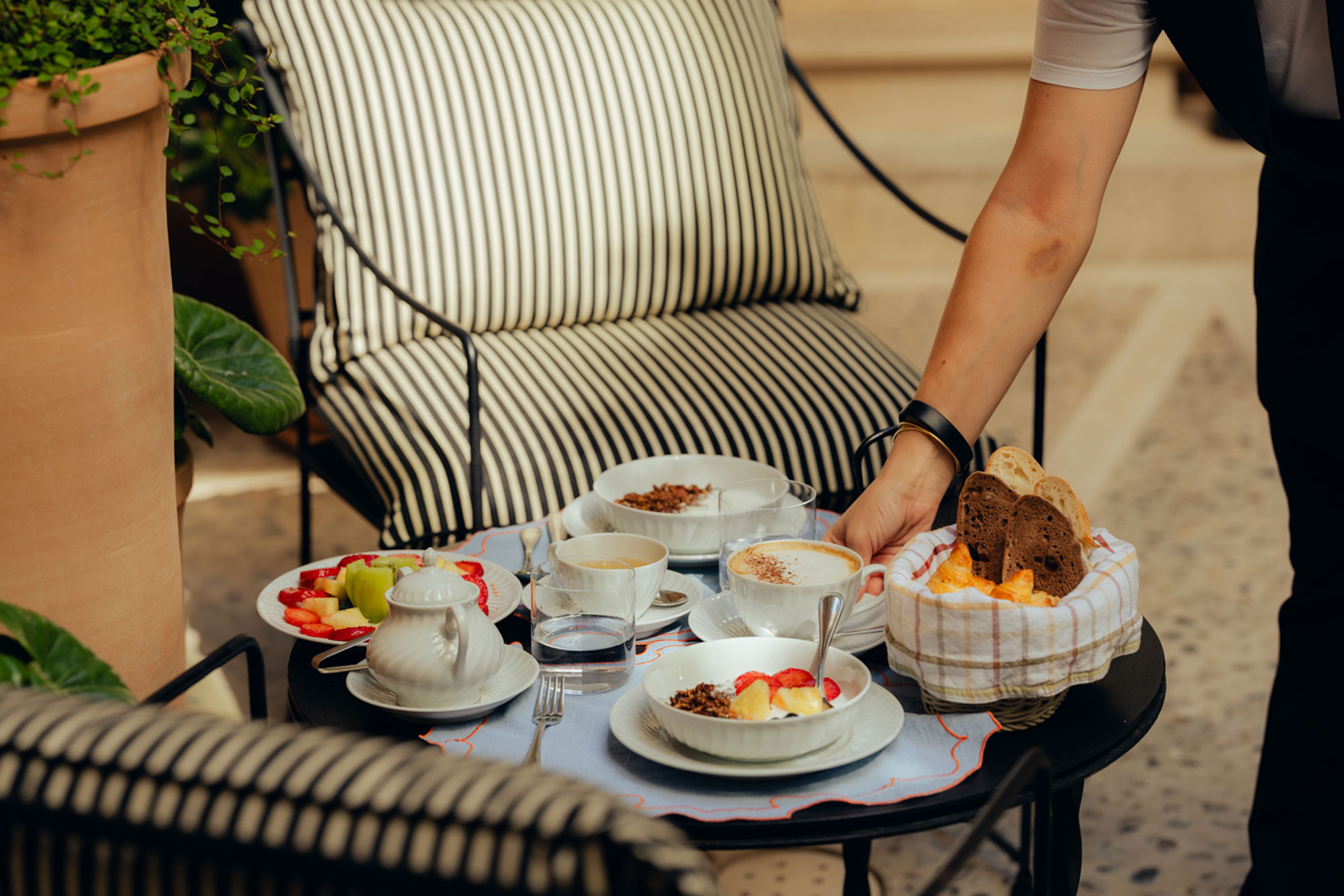
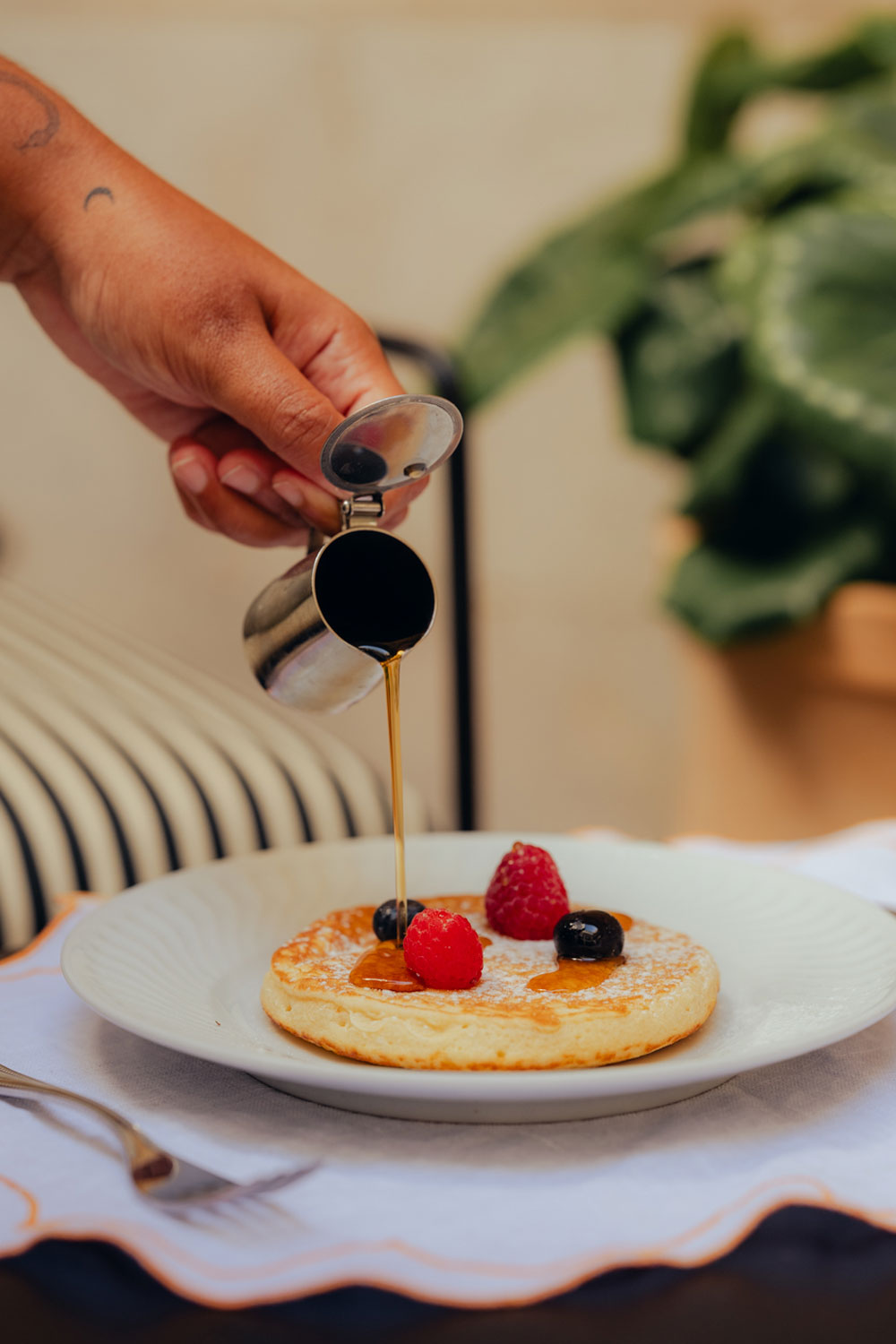
Breakfast is served à la carte in the communal sitting rooms, where sofas and generous armchairs surround low tables. Guests sit fairly close together, an arrangement that might suggest awkward encounters over morning coffee. Somehow, it works.
We ordered freshly prepared dishes, lingered and watched the house wake up at its own pace. People appeared for breakfast, went out into Palma or set off to explore the island. During the rest of our stay, we saw remarkably little of them.
The staff contributed to this sense of ease. They were friendly and helpful, though hardly effusive, and seemed content to let us get on with things. The informality may divide opinion. Anyone expecting a ceremonious welcome or constant attention could find Portella a little reserved.
There is also a Technogym-equipped fitness studio, a treatment room and a stone hammam occupying the space once used for the house’s pottery oven. We left these unexplored. The courtyard, sitting rooms and rooftop terrace provided ample places to withdraw between excursions.
With so much of Palma on the doorstep, we found ourselves spending much of the day elsewhere. Portella had an agreeable habit of fading into the background, ready to welcome us back whenever we had exhausted ourselves on the city’s streets.