Paris has never lacked perfume. What feels new is the shop itself. Across the French capital, a wave of niche houses is opening ambitious standalone boutiques built around perfumers, raw materials, architecture and new ways of smelling. In France, perfume may begin in Grasse, but increasingly it is being staged in Paris.
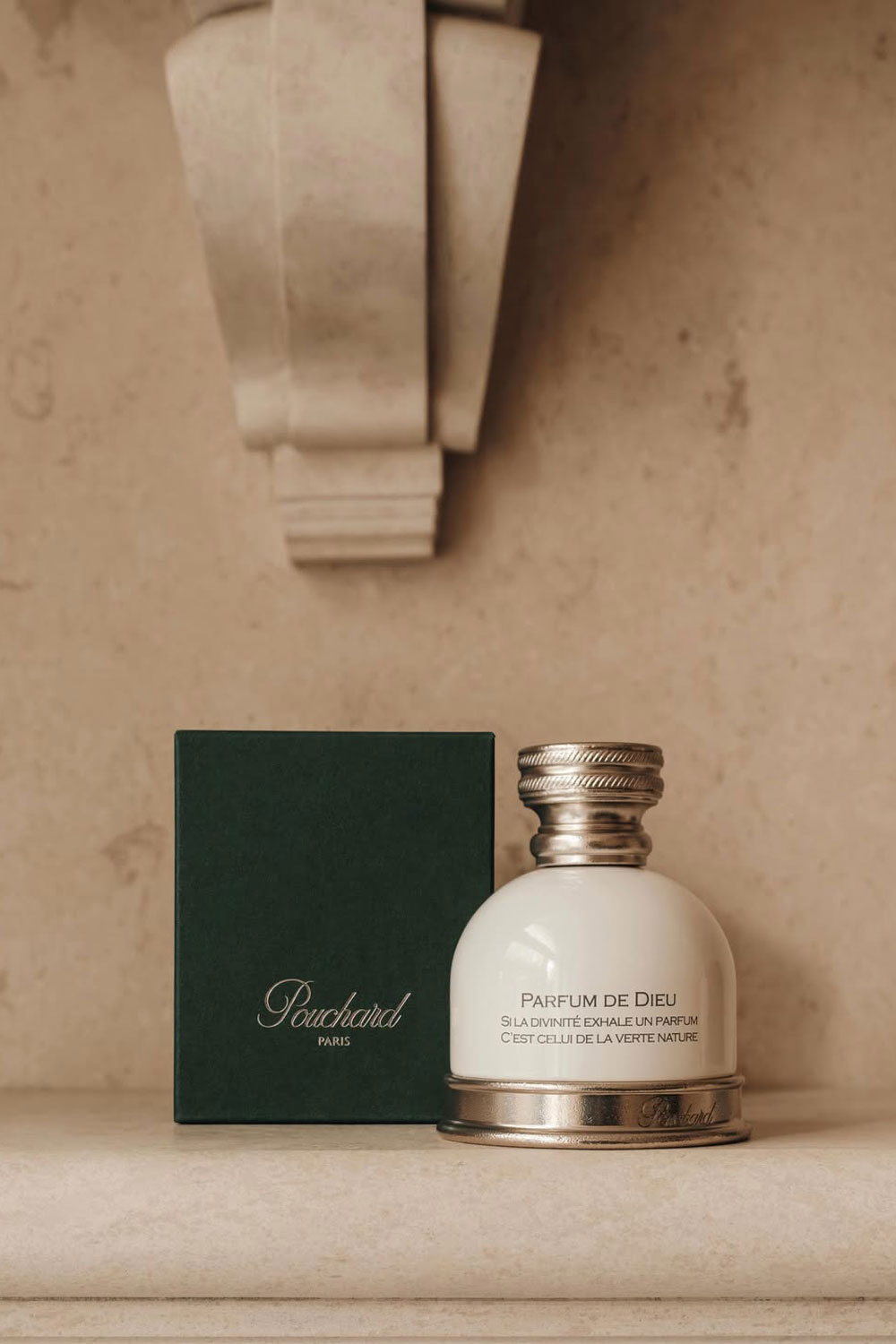
Pouchard is the address for anyone bored by the standard ritual of spraying paper strips across a counter. Fourteen artisans and artists worked on its Rive Gauche interior, from ironworkers and ceramicists to calligraphers and mosaicists, giving the shop the atmosphere of an eccentric private workshop. Its strangest device is Le Souffle, developed with trumpet maker A. Jaminet to release extremely fine fragrance particles that disappear almost immediately and reduce olfactory fatigue. The six-fragrance collection is too young to have true icons, but smoky, resinous Lent et Grave and iris-led Piège are particularly good places to begin.
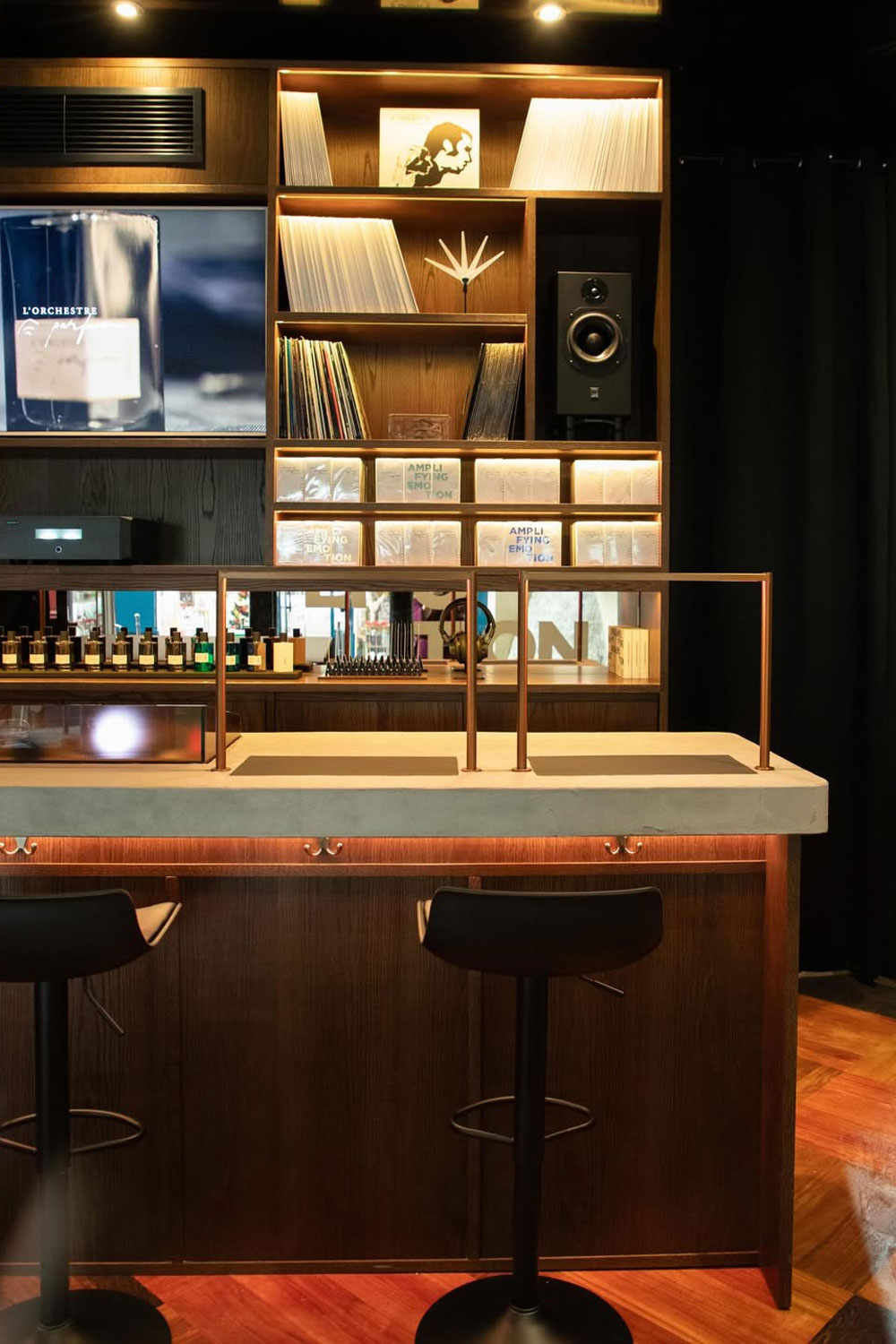
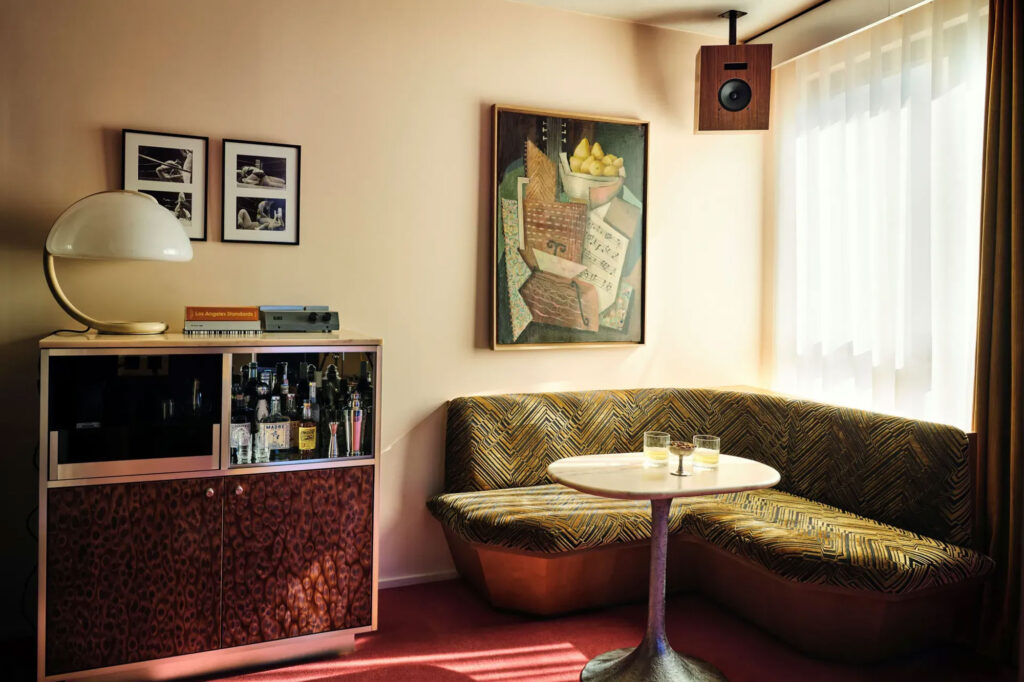
Every fragrance has its own soundtrack at L’Orchestre Parfum. Founder Pierre Guguen developed the idea after moving between two worlds – fragrance development by day and playing music at night – eventually pairing perfumers with musicians to create scent and sound together. The Bourg-Tibourg flagship takes cues from Japanese jazz kissa listening bars: dark timber, vinyl, subdued lighting and proper audio equipment make smelling unusually immersive. Piano Santal is the house’s clearest hit, a creamy sandalwood fragrance with musk and milk-like softness, while Bouquet Encore pushes towards floral territory. Put on the headphones before smelling; here the music is not decoration.
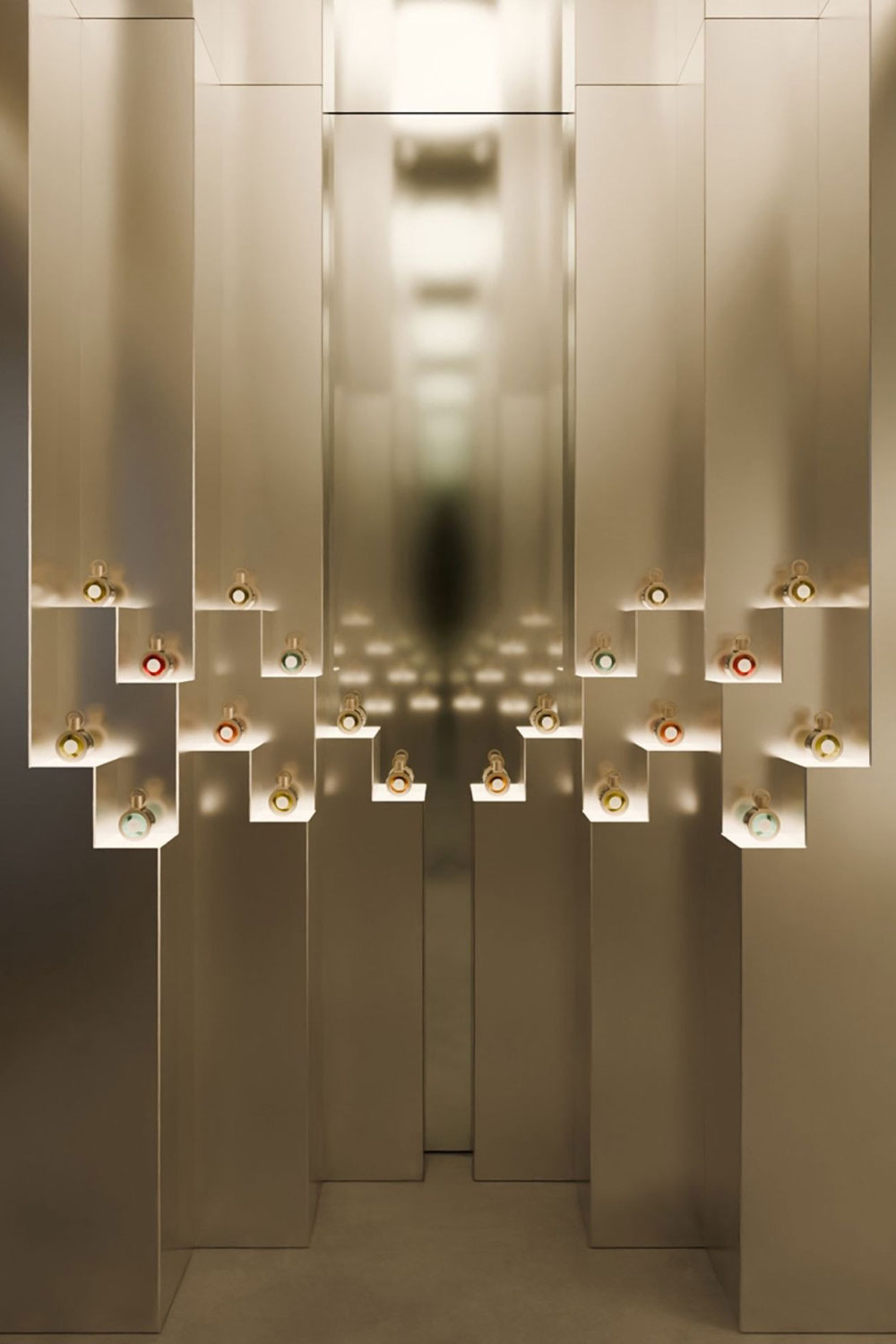
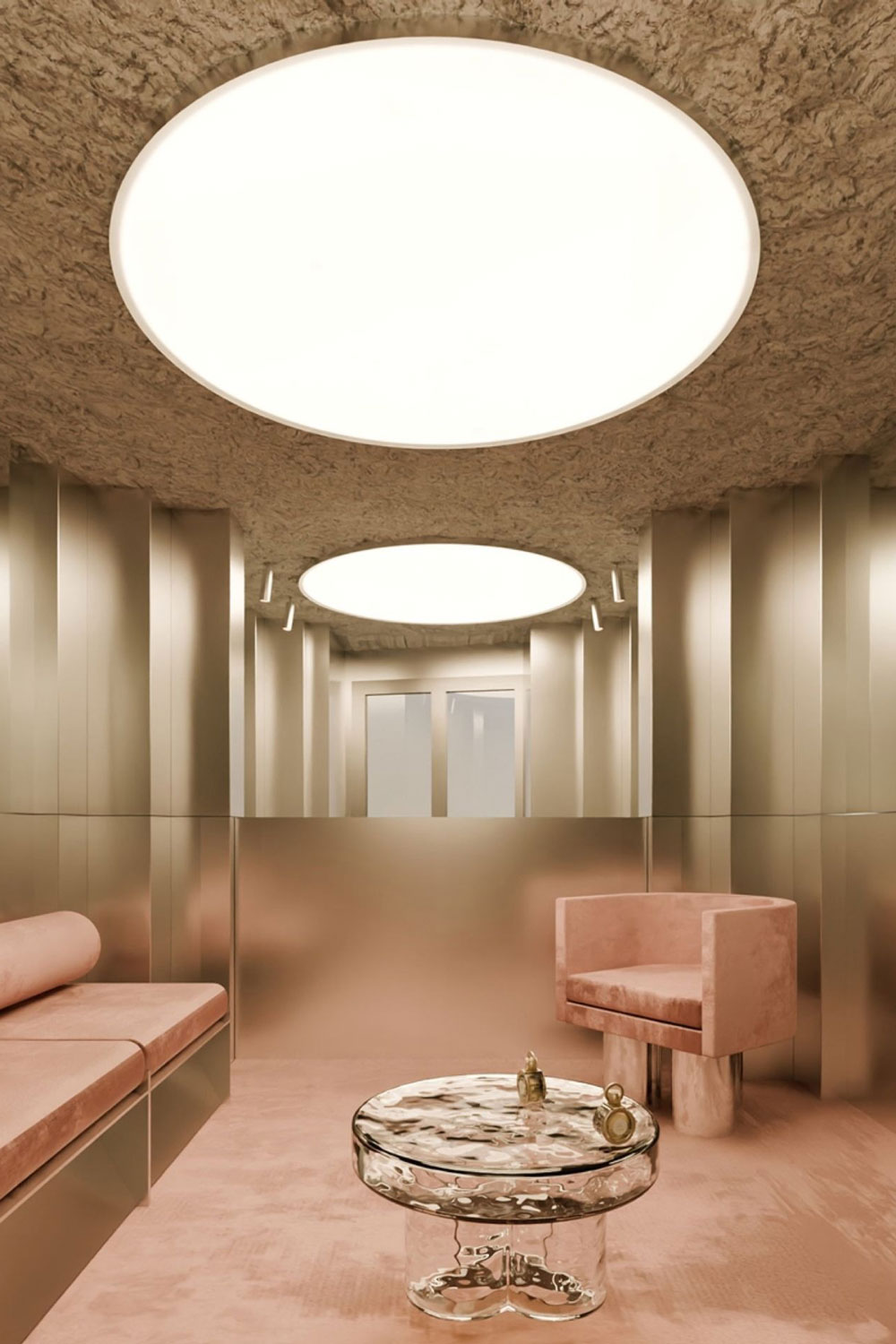
Perfume shopping on Rue Saint-Honoré can get very polished very quickly; Caron gives it a stranger kind of calm. The French perfume house, founded in 1904 by Ernest Daltroff, has turned its 2026 Saint-Honoré boutique into a stripped-back sensory room under artistic director Olivia de Rothschild. Casper Mueller Kneer Architects shaped the space with metal, concrete, repeated lines, diffuse reflections and bottles set at eye level, so scent feels less like counter service and more like direct encounter. At the centre, Atelier Blam’s reworked perfume fountain keeps Caron’s refill ritual in play with colder, sharper architecture around it.
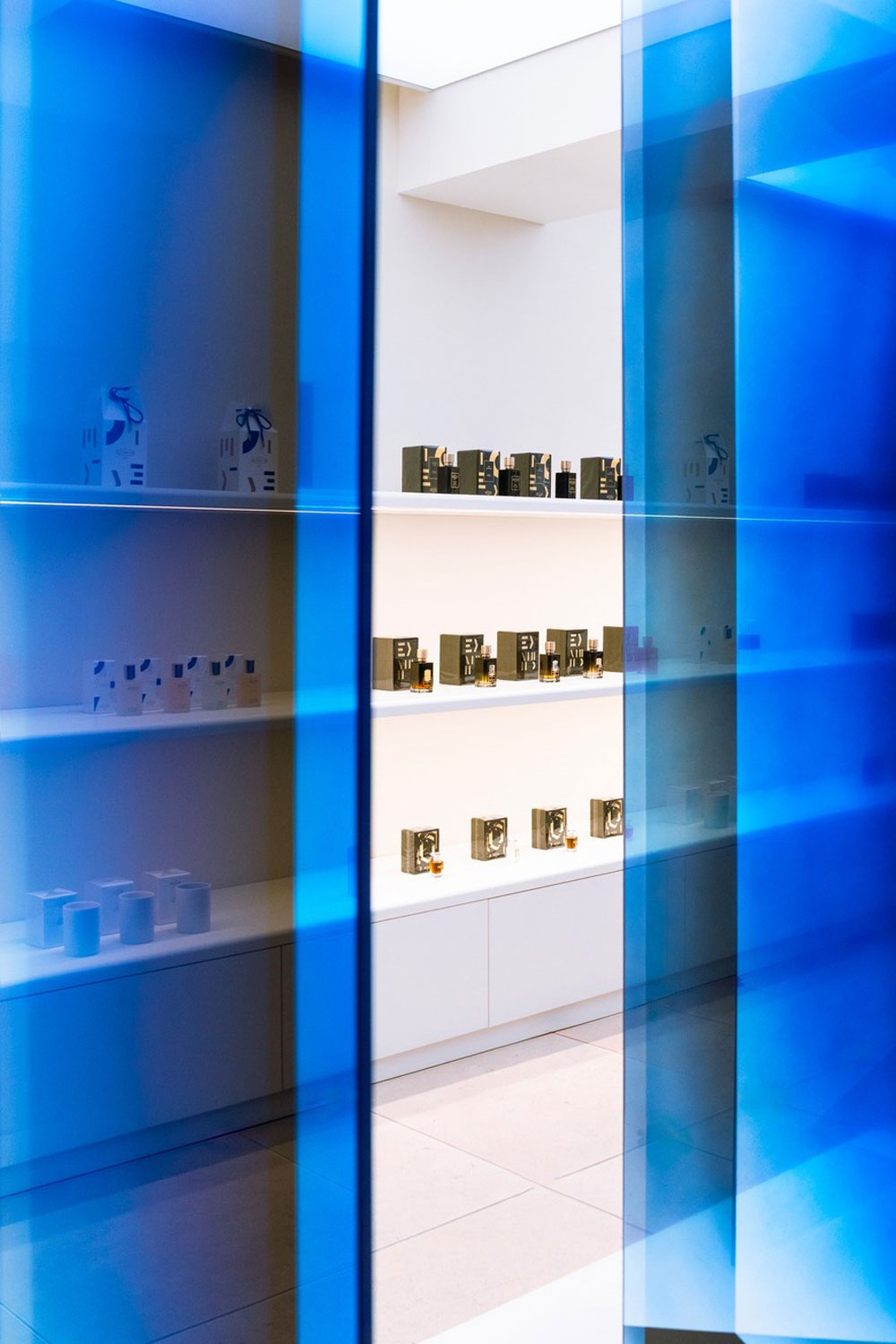
Matière Première puts the raw material before almost everything else, and its first Paris flagship makes that philosophy physical. Founded in 2019 by perfumer Aurélien Guichard with Caius von Knorring and Cédric Meiffret, the house builds each fragrance around an overdose of one central ingredient. Swedish studio Halleroed translated that approach into just 46 square metres of grey limestone, bronze, stainless steel, timber and blue-tinted blown glass. One area is devoted to the fragrances, including Radical Rose and Crystal Saffron, while another lets visitors explore raw materials such as Rose Centifolia and tuberose. Guichard grows both himself in Grasse, making provenance unusually tangible here.
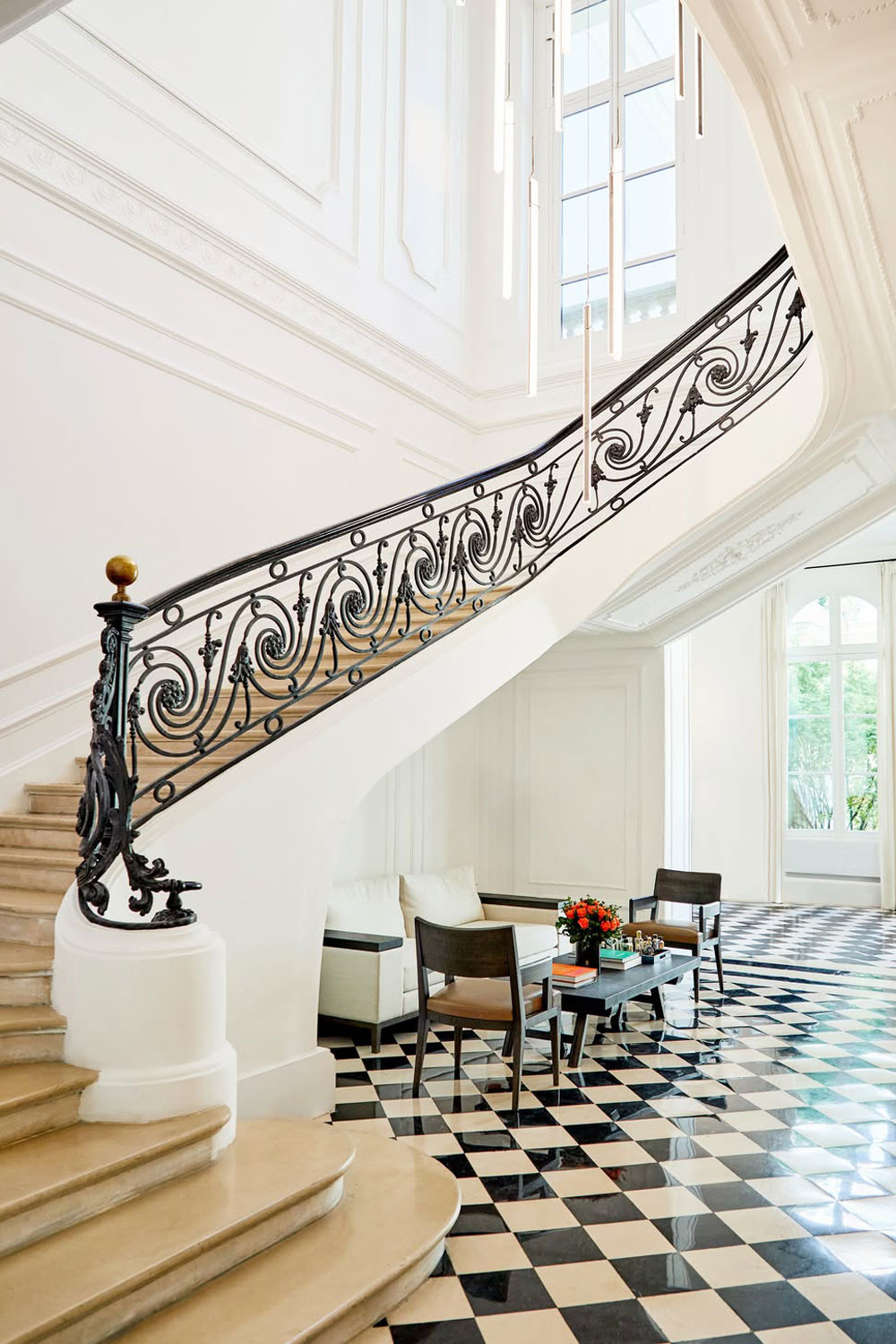
Paris itself supplies the map at Solférino. Created by Interparfums founder Philippe Bénacin, the young fragrance house takes its name from the company’s 18th-century mansion on Rue de Solférino, then names its perfumes after imagined moments around the capital. Bismut & Bismut and Carré Basset translated that idea into the Saint-Honoré flagship with black-and-white marble, mouldings, lacquer, gilded niches and a monumental mirror. Rêverie sur Seine is an elegant neroli-led introduction, while Un Baiser Place Vendôme moves towards iris and sandalwood. The collection is still young, but the house already feels unusually coherent – Parisian without relying on postcard nostalgia.
Frédéric Malle’s Marais boutique turns perfume shopping into a small architectural event. Malle worked with Paris studio Jakob + MacFarlane to insert a mirrored box inside the shell of a historic building, with sculptural wooden forms projecting from the walls as shelves, tables and refrigerated fragrance cabinets. The setting suits a house that has treated perfumers as authors since 2000, giving them unusual creative freedom and putting their names on the bottle. Dominique Ropion’s Portrait of a Lady is the obvious landmark, joined by Maurice Roucel’s Musc Ravageur. Ask to browse by perfumer rather than fragrance family.
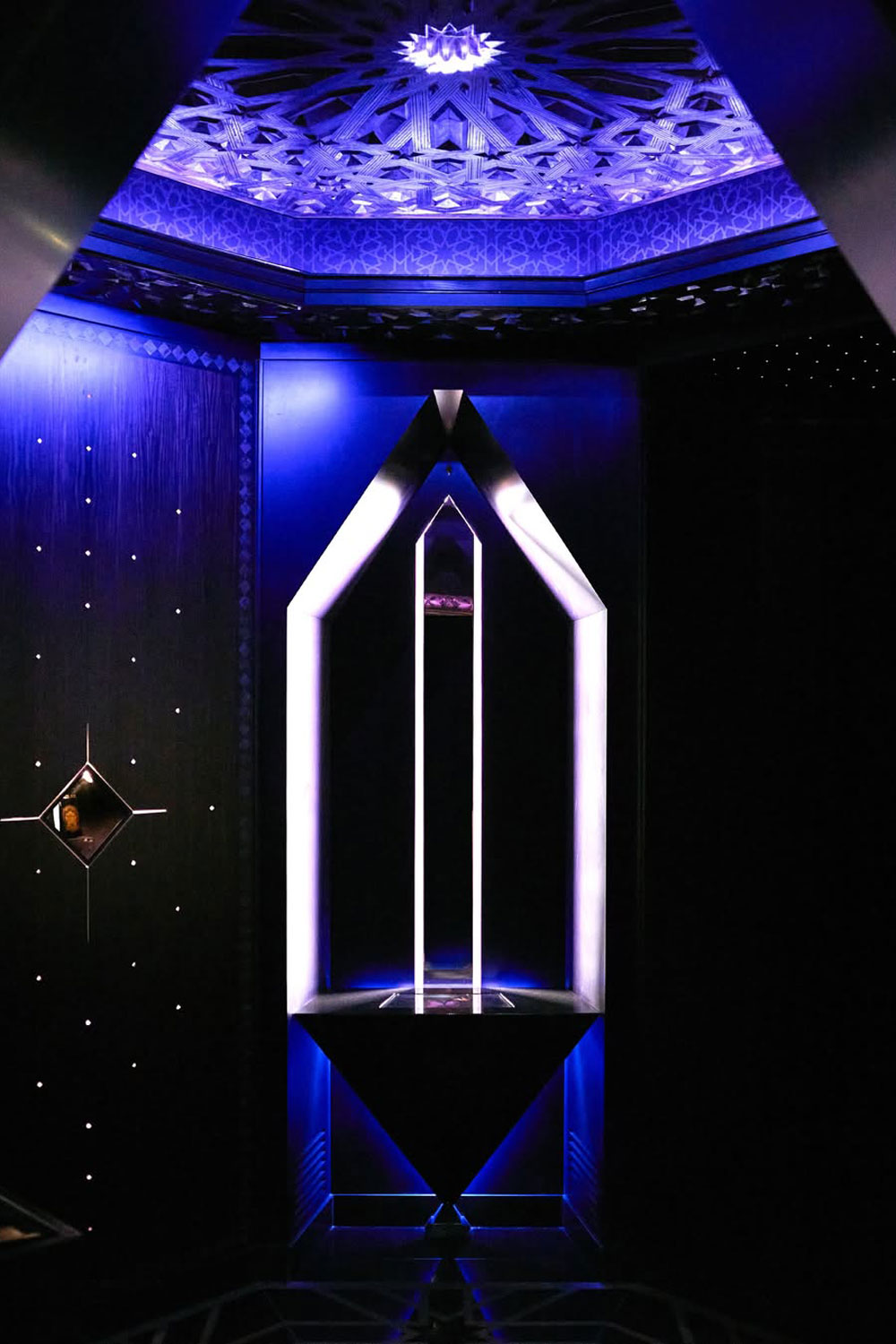
Some perfume boutiques sell fragrance; Serge Lutens’ Palais Royal address feels like entering someone else’s private mythology. Lutens designed the space himself in 1992, combining Directoire references with Japanese and Moroccan influences, dark timber, purple velvet, brass and an elaborate spiral staircase beneath the garden arcades. The boutique opened alongside Féminité du Bois, whose cedar-heavy structure became hugely influential and remains the historical place to start. Ambre Sultan and rose-and-pepper La Fille de Berlin take the house in very different directions.
Maison Diptyque is what happens when a perfume shop starts behaving like a collector’s Paris apartment. The 400-plus-square-metre Rue Duphot address moves through rooms dedicated to scent, candles, art and craft, with mosaics, stained glass, gilded ceilings and commissioned work by contemporary makers. Exhibitions and workshops make it worth entering even when you are not buying fragrance. Orphéon is particularly apt here, recalling the Saint-Germain jazz bar once beside Diptyque’s original boutique, with cedar, tonka and juniper. Fig-tree classic Philosykos offers the other essential route into a house whose visual culture has always mattered almost as much as smell.
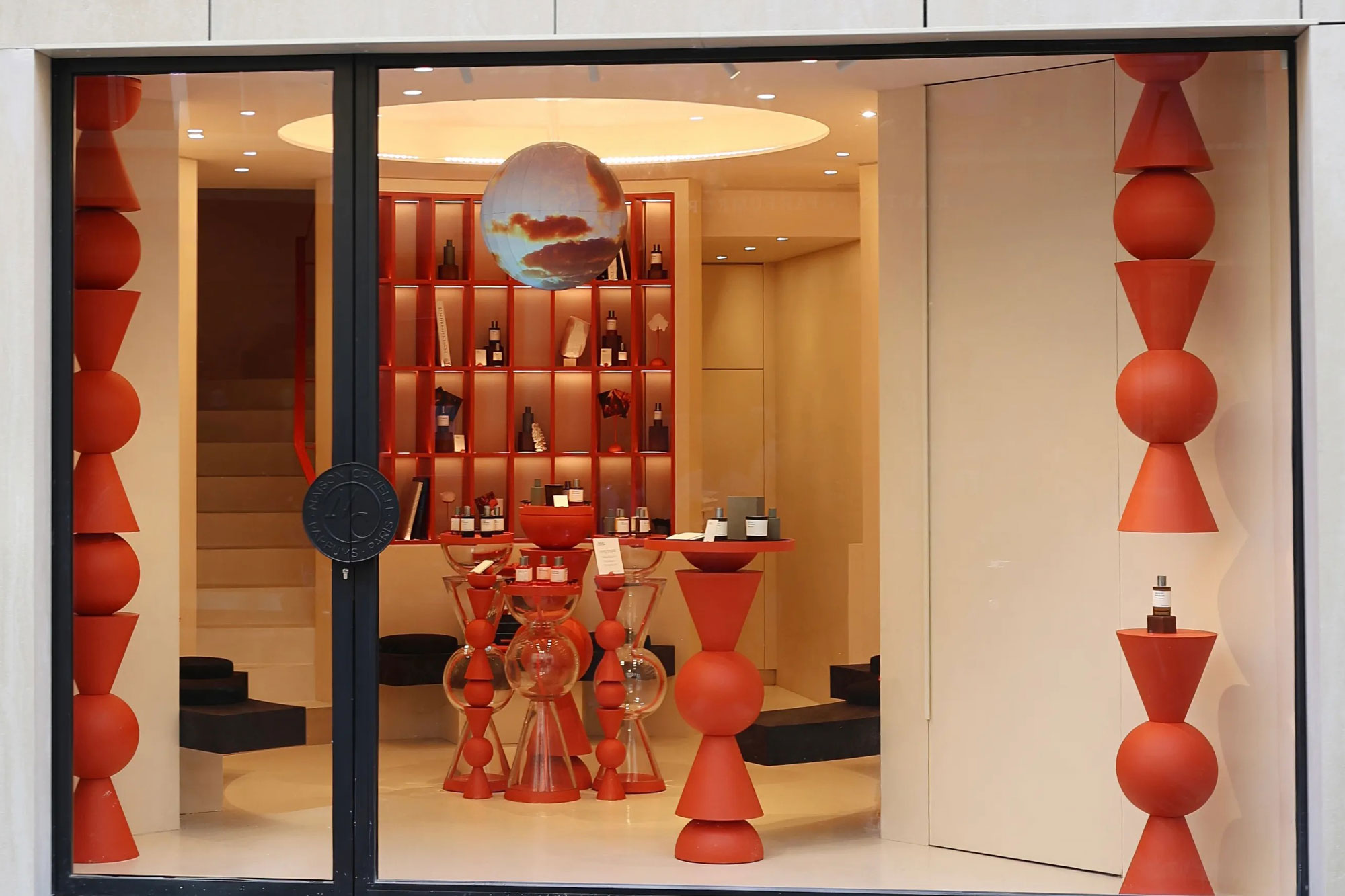
There is no sales counter at Maison Crivelli’s first flagship. Instead, founder Thibaud Crivelli has built what he calls an olfactory agora: charred timber benches curve through an open central space where visitors sit, smell and compare without being funnelled towards a till. Everyone receives a small exploration notebook for blotters and impressions, reinforcing Crivelli’s belief that perfume should begin with an unexpected sensory encounter. The house’s two clearest signatures are also its bestsellers: Oud MaracuJá crashes tart passion fruit into oud, while Hibiscus MahaJád pairs hibiscus and rose with leather and vanilla.
Bertrand Duchaufour waited roughly four decades before opening a perfume house under his own creative control, and L’Entropiste feels suitably personal. The Marais boutique is part shop, part gallery and part working laboratory, with Duchaufour’s perfume-making visible behind glass. Beige mineral surfaces by Ideal Work keep the backdrop deliberately quiet, interrupted by geometric reliefs and art chosen by the perfumer himself. Dorian’s Spleen captures the house at its strangest and best, combining whisky, coffee and ash, while Jodhpur 6am heads somewhere lighter. The address faces the gardens of the Archives Nationales, useful context for anyone exploring the northern Marais.
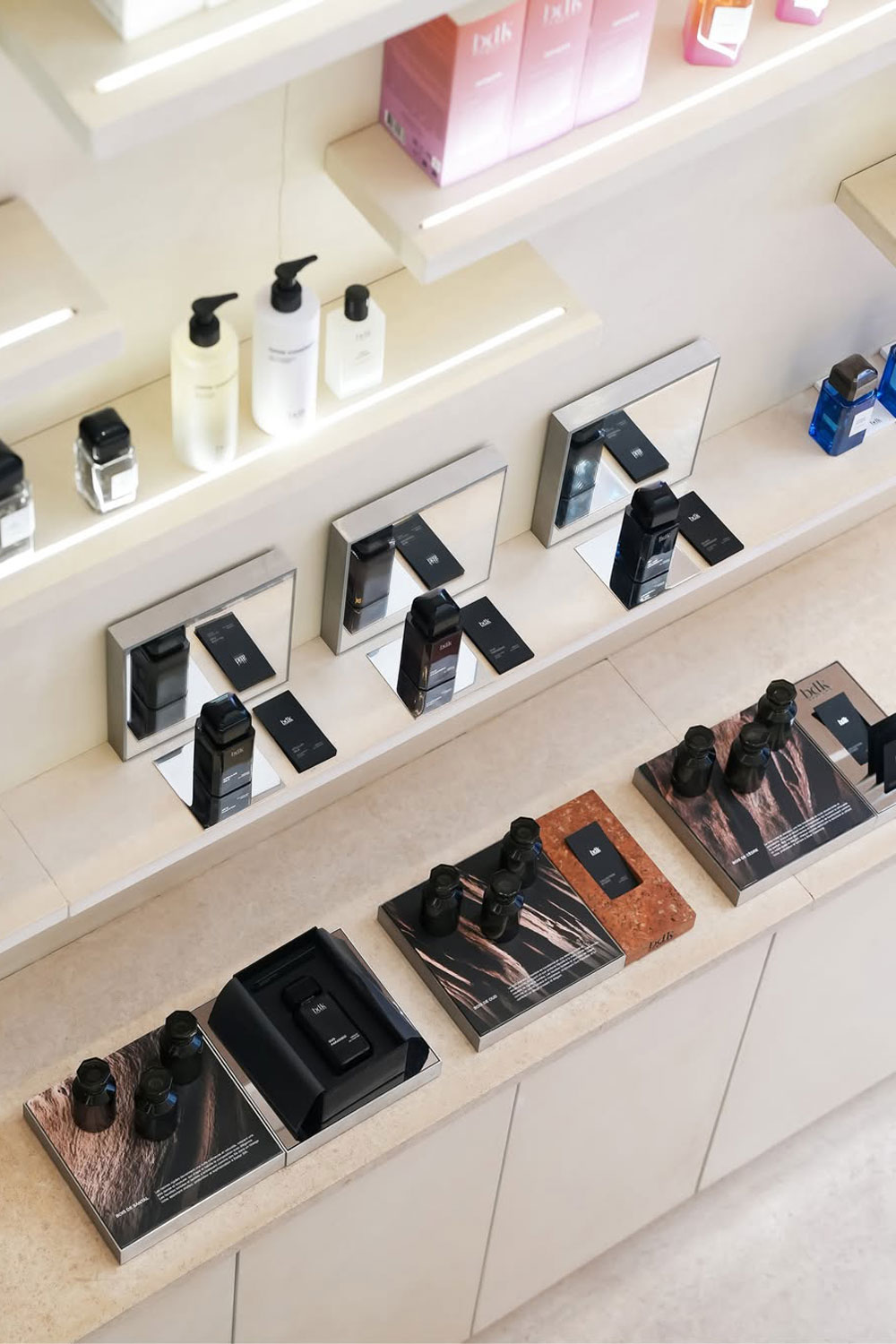
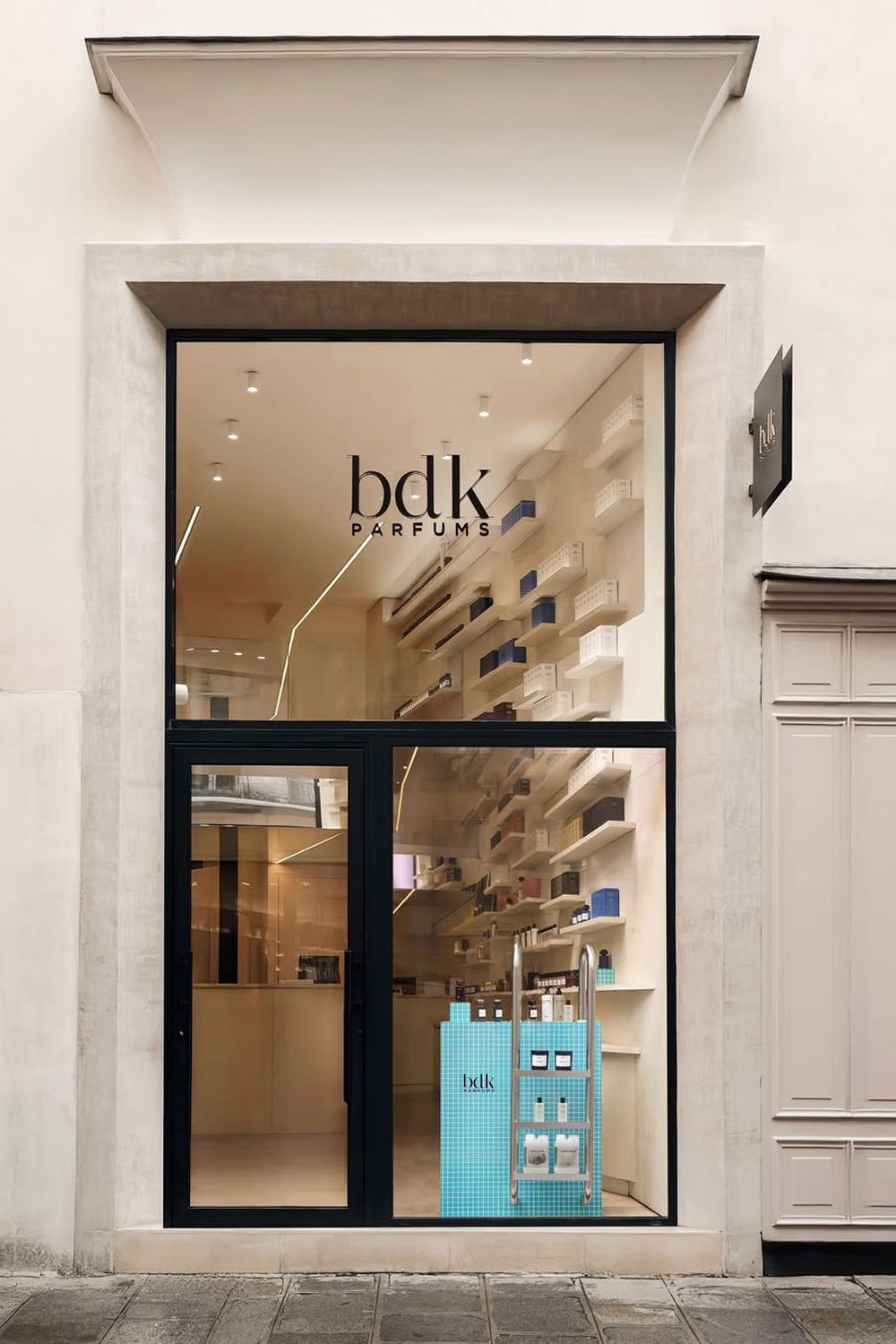
BDK Parfums’s first flagship turns perfume shopping into something closer to browsing a private library. Founder David Benedek worked with architects Arthur Blanche and Daniele Profita on a pale, mineral interior of Burgundy stone, glass and concrete, with raw materials available to smell upstairs and a private salon for consultations. The family connection matters too: Benedek’s grandparents sold luxury fragrance nearby in the 1950s. Gris Charnel, with fig, black tea, iris and sandalwood, is now one of the house’s signatures, joined by cherry-and-vanilla Rouge Smoking.
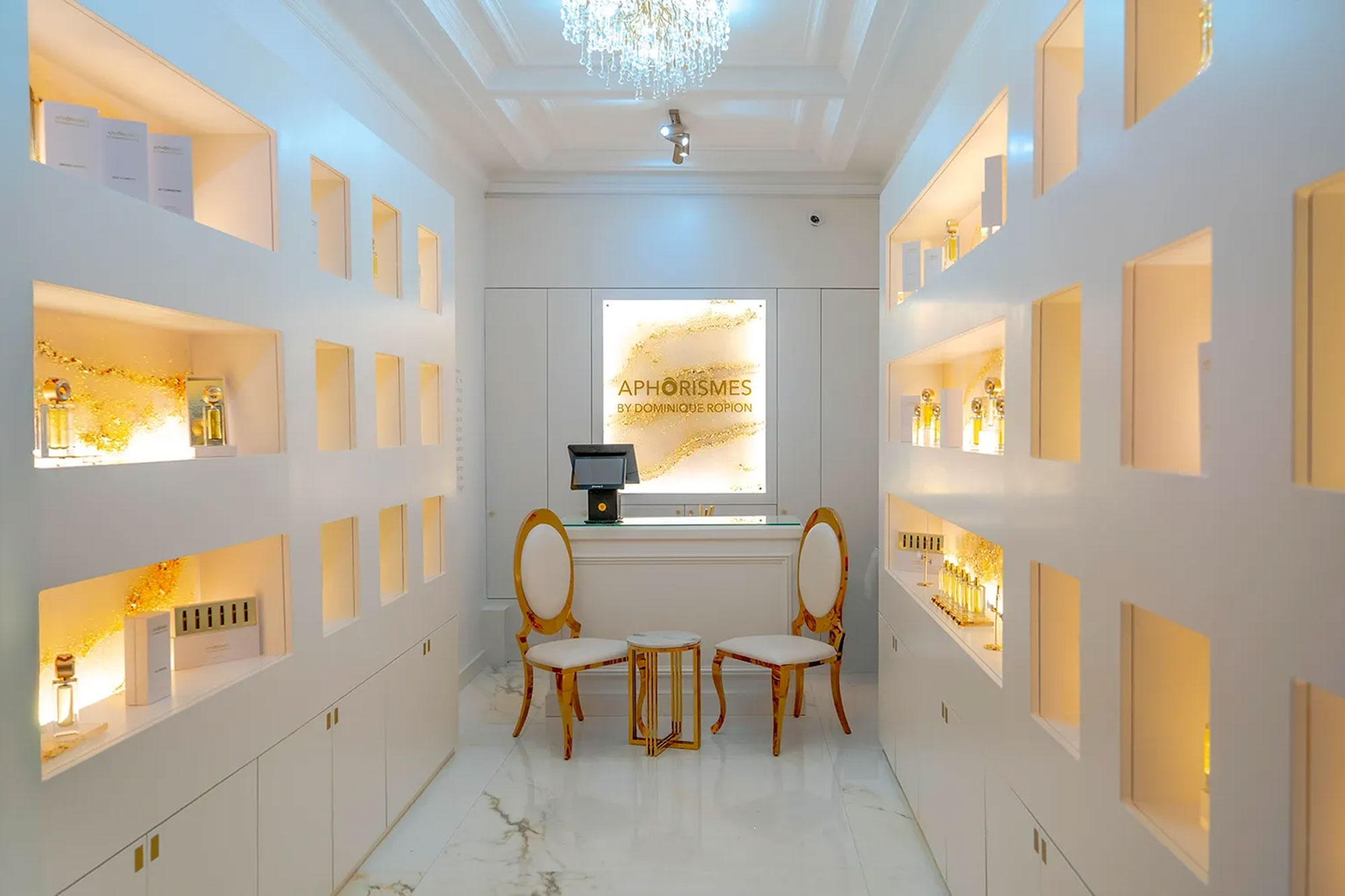
After decades creating perfumes for other houses, Dominique Ropion finally has a Paris address entirely his own. Aphorismes distils the master perfumer’s career into a tightly edited collection built around classic fragrance families, revisited without client briefs or brand codes. The Rue Marbeuf boutique feels polished but intimate, with warm light, sculptural bottles and enough restraint to keep attention on the juice. Start with Innocent Tuberose, which makes a notoriously voluptuous flower feel unexpectedly clear, or A Rose is a Rose, where Ropion pushes rose into darker, spicier territory. For perfume obsessives, the real draw is experiencing his work without an intermediary.
Photography courtesy of Aphorismes by Dominique Ropion
00
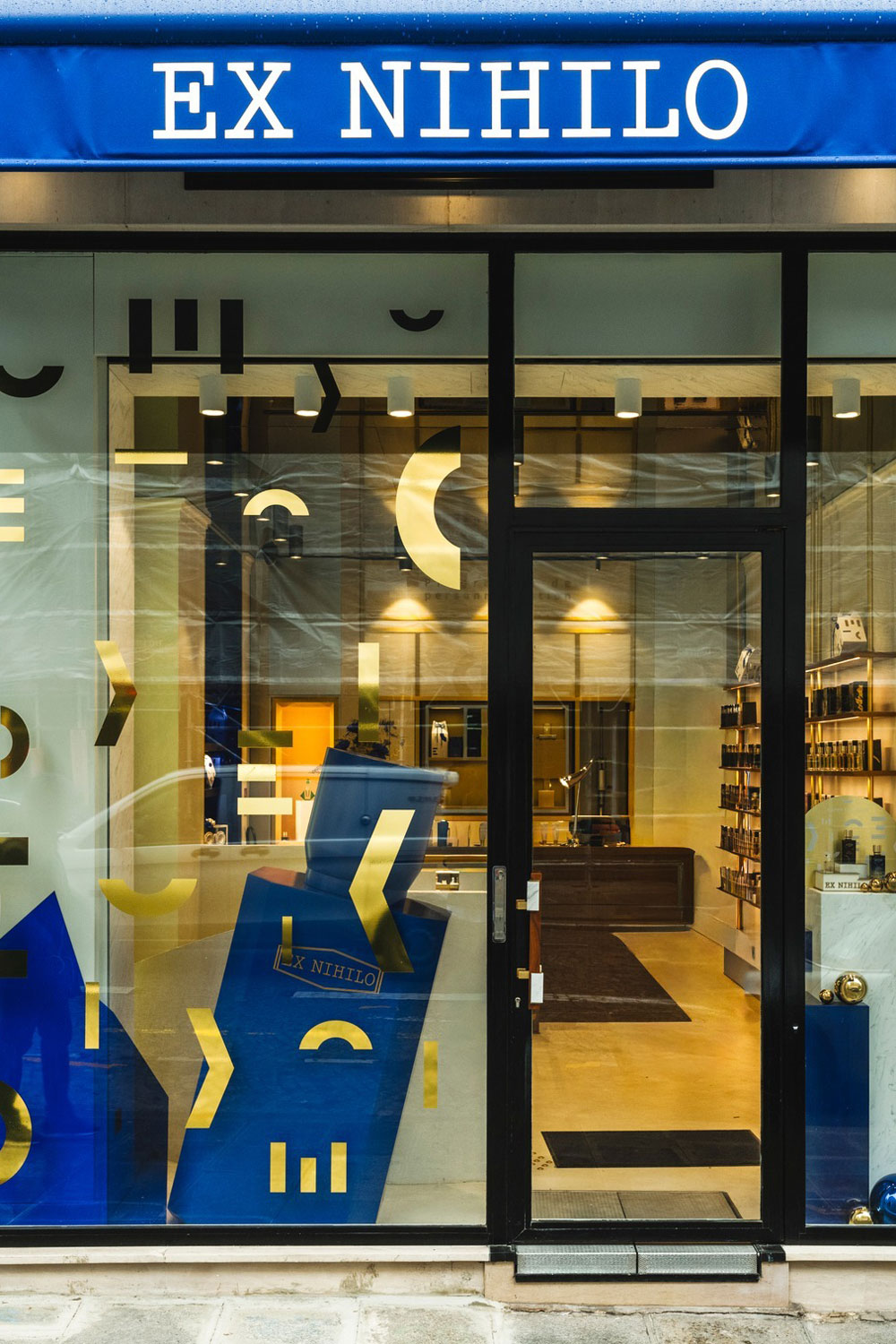
Ex Nihilo
Paris, France
Customisation has been part of Ex Nihilo from the start, and its current Saint-Honoré home pushes that idea into gallery territory. Founders Sylvie Loday, Olivier Royère and Benoît Verdier built the Paris house around contemporary French perfumery rather than nostalgia, with polished stone, saturated colour, art installations and the in-house Osmologue system for adjusting selected scents with ingredients such as iris or sandalwood. Fleur Narcotique remains the early landmark, but pear, bergamot and musky woods have made Blue Talisman another defining scent.
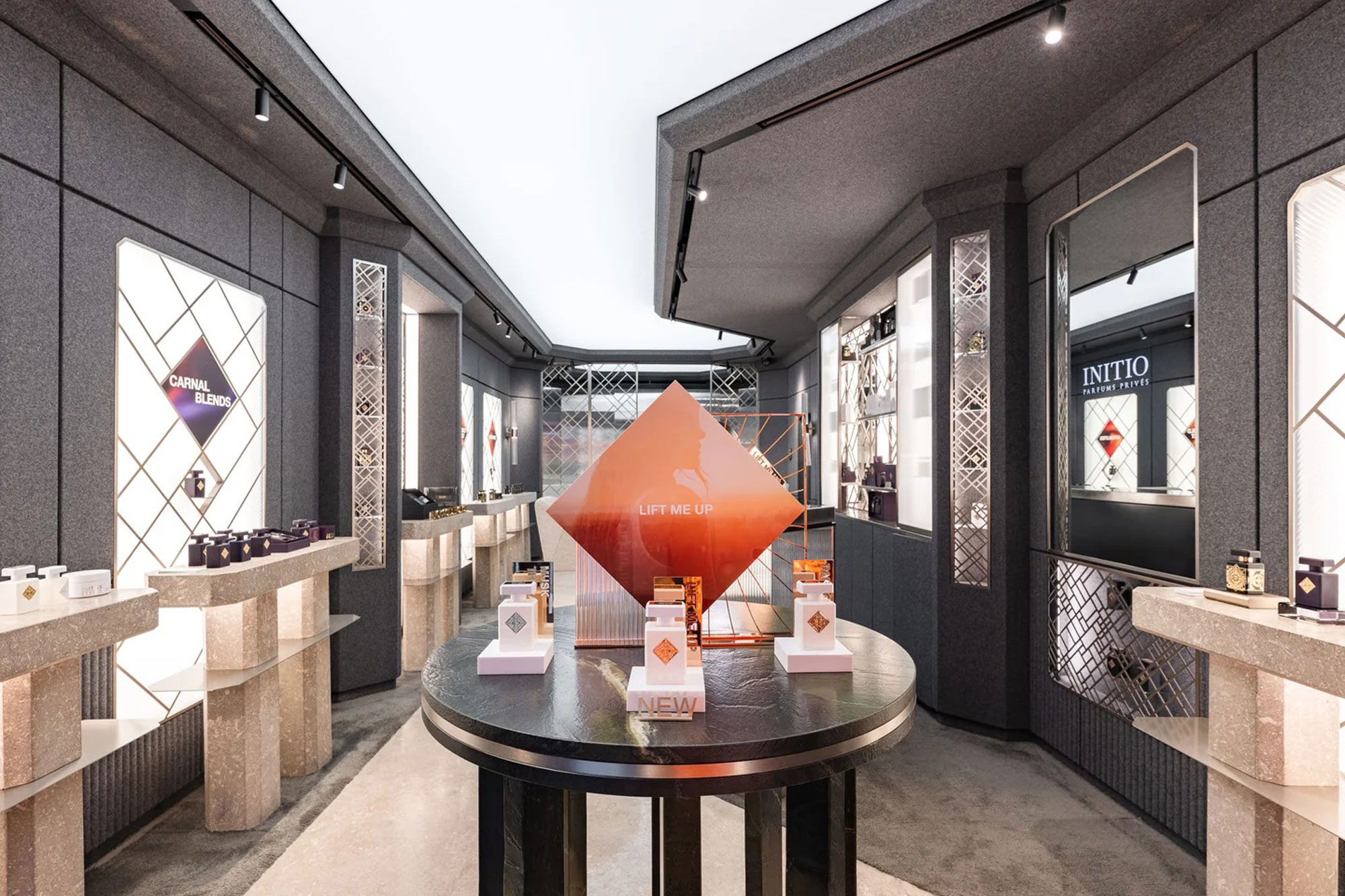
Initio treats fragrance as something capable of affecting mood, desire and perception. Its Paris flagship, Le 320, turns that idea physical through a dark, private atmosphere and the Feel Lab, where EEG technology tracks responses to scent during blind smelling sessions. That may sound theatrical, but it fits a house that has always leaned into perfume’s psychological pull. The obvious starting points are Oud for Greatness, dense with oud and saffron, and rum-and-tobacco Side Effect – both officially classed among Initio’s icons. Come here when you want perfume consultation to feel more like an experiment than a sales pitch.