Mallorca is so easily reduced to beaches and resorts that Palma de Mallorca’s cultural depth is easy to miss. Yet Spain’s island capital is packed with art, architecture and design, much of it free to enter. These six spaces reveal a city whose culture is richer, stranger and more accessible than expected.
Top photography courtesy of The Mediterranean Insider
00
Fundació Miró Mallorca
Palma de Mallorca, Spain
Fundació Miró Mallorca is less a museum than a preserved working world. Joan Miró settled permanently in Mallorca in 1956 and finally gained the studio he had long wanted, designed by his friend Josep Lluís Sert. Sert was then barred from practising architecture in Spain, making the project unusually charged. Inside, brushes, paint, postcards, shells and found objects still crowd the studio, revealing how Miró worked. Nearby, Rafael Moneo’s 1992 building holds part of a collection of around 7,000 works and objects. The contrast between Sert’s intimate studio and Moneo’s later museum makes architecture almost as important as the art.
Fundació Miró Mallorca
Carrer de Saridakis, 29
Palma de Mallorca
Mallorca
Spain
Es Baluard rewards a little wandering. The museum is built into Palma’s 16th-century Sant Pere bastion, so contemporary galleries keep giving way to sandstone walls, courtyards and sudden slices of sky. Its collection ranges from Joan Miró and Joaquín Sorolla to artists from the Balearics and wider Mediterranean, but temporary exhibitions are usually the reason to check what is on. Don’t miss the Aljub, a 1640s freshwater cistern that once supplied the neighbourhood and harbour boats, then became a rubbish dump before being rediscovered during construction of the museum. Finish on the ramparts for views towards La Seu.
Es Baluard Museu d’Art Contemporani de Palma
Plaça de la Porta de Santa Catalina, 10
Palma de Mallorca
Mallorca
Spain
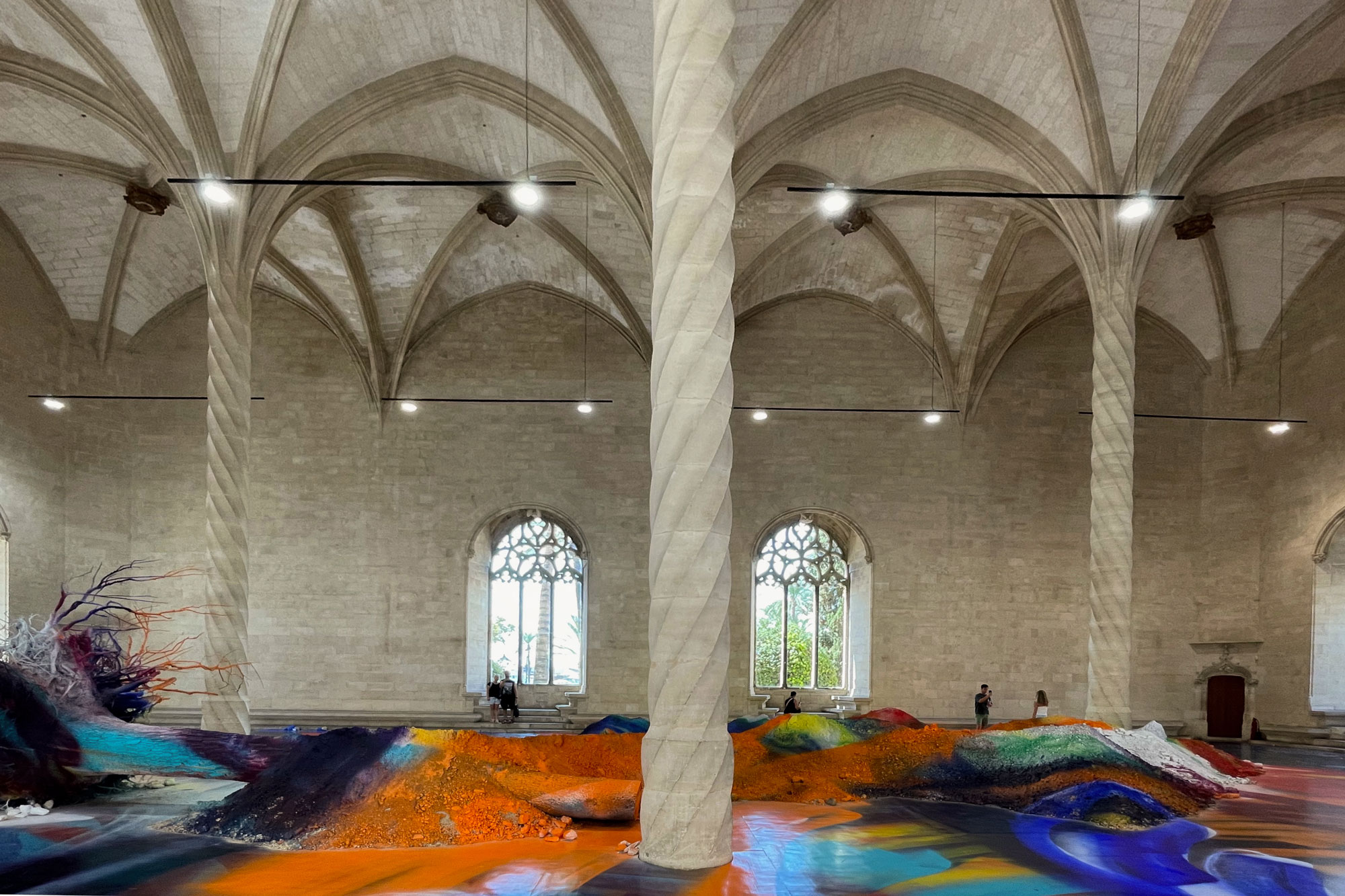
La Llotja is Palma’s commercial history turned into a beautiful cultural space. Guillem Sagrera designed the 15th-century merchants’ exchange as a single soaring hall, where six twisting stone columns rise without bases or capitals and branch into ribbed vaults like palm trees. When it was built, the sea reached much closer and the building formed part of Palma’s maritime façade. Six centuries after its construction contract was signed in 1426, it still feels startlingly light. Today La Llotja hosts temporary exhibitions and cultural events, giving contemporary art a setting that can easily steal the show. Entry is free.
Can Balaguer is one of Palma’s best places to understand how the city once lived behind its stone façades. The house preserves period furniture, paintings and decorative details, while the permanent exhibition traces domestic interiors from 1700 to 1950. Begin in the courtyard, then climb to the piano nobile, where carved wood, patterned textiles and furnished rooms shift the mood from austere stone to bourgeois comfort. A separate medieval room reaches further back into the building’s history. Unlike many of Palma’s private courtyards, this is one you can properly enter rather than admire through a gate. Admission is free.
Can Balaguer
Carrer de la Unió, 3
Palma de Mallorca
Mallorca
Spain
Casal Solleric makes a case for seeing contemporary art in an 18th-century palace. Enter from Passeig del Born and the building immediately competes with whatever is on display: a courtyard, lowered arches and an imperial staircase designed to impress. The rooms are comparatively spare, with almost none of the original furniture surviving apart from an 18th-century bed. That makes the house unusually adaptable as an exhibition space, with a programme mixing Balearic artists and international names. Check what is on before you visit, but come even if the show does not convince you. The architecture easily justifies the stop.
Casal Solleric
Passeig del Born, 27
Palma de Mallorca
Mallorca
Spain
Caixa Forum Palma occupies the former Gran Hotel, opened in 1903 and still the city’s great Modernista landmark. Designed by Lluís Domènech i Montaner, the architect behind Barcelona’s Palau de la Música Catalana, the building signalled a more cosmopolitan Palma at the start of the 20th century. Look up before you go inside: brick, stucco, stone, glazed ceramics, wrought iron and floral capitals turn the façade into a lesson in Catalan Modernisme. Today the former hotel hosts changing exhibitions and the permanent Anglada-Camarasa collection, but the building itself is the main event. Even a short visit rewards anyone interested in architecture.
Caixa Forum Palma
Plaça de Weyler, 3
Palma de Mallorca
Mallorca
Spain