An insider’s guide to the must-see sights in Athens
Athens, the restless heart of Attica in southern Greece, can feel overwhelming at first glance, especially when you’re moving through crowds all chasing the same postcard view. But the city rewards anyone willing to shift their angle a little. The famous landmarks still hold their power, but they reveal far more when approached with curiosity rather than obligation. This guide is built for travellers who enjoy that switch in perspective. Think of it as a way to step into Athens with sharper senses, ready to experience its icons in a whole new light.
Rising on a limestone outcrop above Athens, the Acropolis is a layered record of power, faith and civic identity all in one site. The site holds a remarkable collection of classical monuments, including the Ionic porch of Erechtheion, the bastion-temple of Temple of Athena Nike and the monumental entrance gateway known as the Propylaea. If you arrive early, before other visitors, you get the light, the quiet and a chance to pause on ancient stone and imagine what the city looked like when gods and mortal ambition shared the skyline. For a different perspective, try walking down the slopes. From the side paths, the Acropolis feels less like a tourist magnet and more like Athens’ original citadel.
Acropolis Athens Greece
02
National Archaeological Museum
If the Acropolis shows Athens’ public face, the National Archaeological Museum reveals its hidden depth. This museum, opened in 1889 after decades of gathering antiquities, houses the richest collection of Greek antiquity artefacts worldwide. Inside you’ll find over 11,000 artefacts, from Neolithic pottery and Mycenaean gold burial treasures to Classical sculptures and mysterious Bronze Age figurines. For a fresh approach, bypass the guidebook names and instead look for the smaller details. The vase painted with everyday scenes, the bronze figure that survived centuries underwater and the shape of a Cycladic figurine that looks modern. Those details connect past and present in a way the grand monuments sometimes can’t.
National Archaeological Museum 28is Oktovriou 44 Athens Greece
03
National Garden of Athens
Just behind the seat of government in central Athens lies the National Garden. A leafy, calm space born in the 19th century under the patronage of a queen seeking refuge from city noise. Spanning roughly 16 hectares, the garden brings together more than 7,000 trees, hundreds of shrubs, winding paths, shady benches and a mosaic of botanical life. It also carries traces of history with column drums, ancient mosaics and Roman‑era fragments peeking out among greenery. We recommend visiting this spot during the golden hour, when the light filters through palms and plane trees and the hum of traffic fades. We often find these easier moments of peace bring deeper appreciation for the city’s many faces.
National Garden of Athens Athens Greece
04
Parthenon
Built between 447 and 432 BC atop the Acropolis, the Parthenon stands as Athens’ most enduring symbol. Its architects (Iktinos and Kallikrates) and sculptor (Phidias) aimed at geometry, balance and austerity, an ideal that still resonates. Its Pentelic marble, Doric columns, sculpted metopes and frieze mark it as a pinnacle of classical architecture. To truly see it with fresh eyes, come before dawn or late in the day, when sculptures cast deep shadows and the city hum recedes. When you visit, try to see it from different angles. From the Acropolis’s north slope, from a terrace on nearby hills or from the entrance gate, to appreciate how this temple dominated the ancient skyline.
Parthenon Athens Greece
05
Plaka
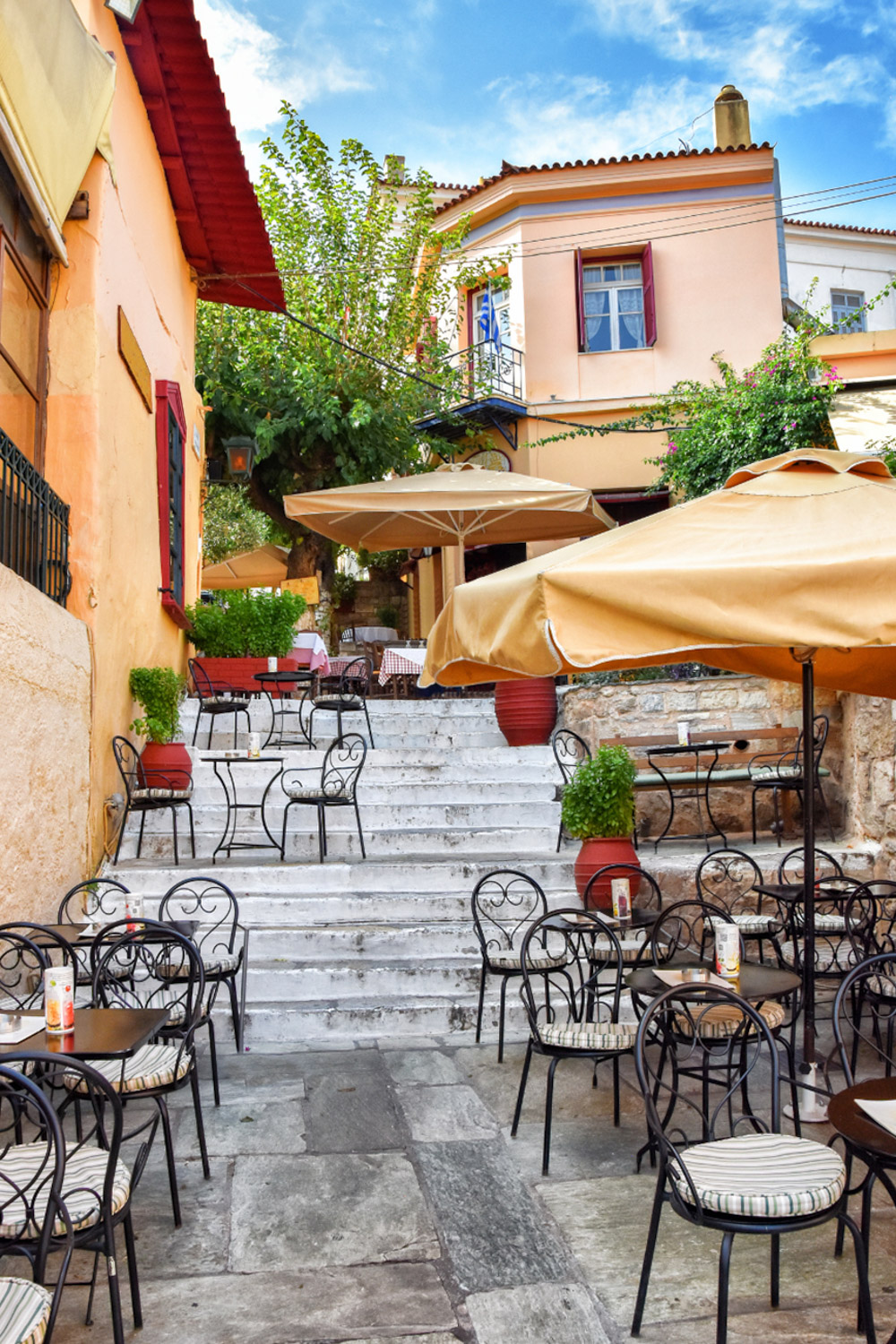
Directly under the rock of the Acropolis lies Plaka, one of Athens’ oldest quarters. Here, neighbourhood houses wear pastel colours and narrow, winding lanes invite you to explore. Strolling through Plaka feels like stepping into a different era. Upper Plaka, right under the Acropolis, carries a gentle hush and close-up views of the monuments above, while the lower parts lead toward lively squares like Monastiraki, where you find street vendors, cafés and artisans. To explore Plaka with a fresh perspective, leave the guidebook at home. Wander without a map, peek into tiny shops, listen to locals chatting outside tavernas and pause when stray cats stroll across ancient stones.
Plaka Athens Greece
06
Theatre of Dionysus
Carved into the southern slope of the Acropolis hill, the Theatre of Dionysus is where Western theatre began. Built originally in the 6th century BC, it evolved through the Classical era into a grand auditorium that, at its peak, held up to 25,000 spectators. This was the stage where the earliest tragedies and comedies by Aeschylus, Sophocles, Euripides and Aristophanes first echoed across Greece. While much of the wooden structure is lost, the carved stone seating orchestra terrace and the slope of the hillside remain. For a fresh vantage point, climb the path above the seating. The slope gives you a quiet, reflective vantage point, where you can imagine a chorus singing against the skyline of ancient Athens.
Theatre of Dionysus Mitseon 25 Athens Greece
07
Ancient Agora of Athens
The Ancient Agora once pulsed with life, with merchants trading, philosophers debating and citizens gathering. Here, Athens invented public life under the open sky. Today, its ruins mark where ideas, politics and daily commerce merged. Walking among the scattered columns, steps and foundations, you sense the layers. Once crowded with citizens trading goods, discussing politics, hearing philosophers speak, worshipping gods and witnessing the birth of ideas that changed the world. We recommend going mid‑afternoon and don’t rush. Take a slow stroll and take it all in. Pause by a ruined wall, imagine vendors shouting in the agora, children playing and citizens debating. Let the empty spaces speak. They carry the resonance of thousands of lives, politics, culture and everyday hustle from over two millennia ago.
Ancient Agora of Athens Athens Greece
08
Acropolis Museum
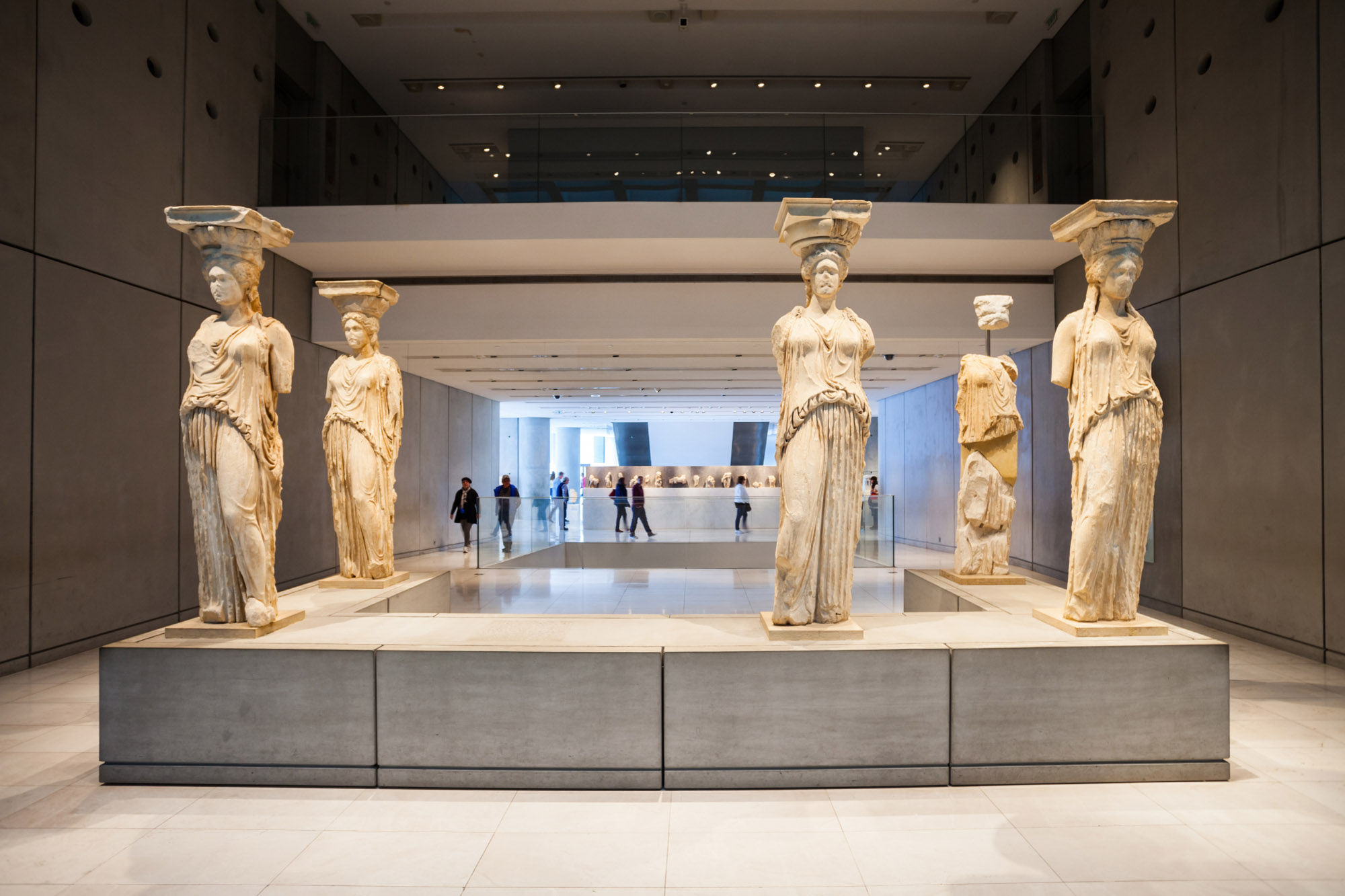
Just a short walk from the Acropolis hill, the modern Acropolis Museum offers a powerful counterpoint. Here, fragments of the past are displayed with clarity, detail and context, giving ancient Athens a voice in the present. The museum opened in 2009, spans 14,000 square metres and houses over 4,250 archaeological objects from the Acropolis and beyond. Walking from floor to floor feels like descending through eras. The building itself is a frame, placing ancient fragments side‑by‑side with modern city life outside. Our favourite way to experience it? First, visit the Acropolis hill early, then later come down here with fresh eyes. Viewing the sculptures in the museum helps you recognise details when you return to the actual ruins.
Acropolis Museum Dionysiou Areopagitou 15 Athens Greece
09
Temple of Hephaestus
At the northwest edge of the Ancient Agora stands the Temple of Hephaestus. A Doric temple remarkably intact for more than two millennia. All 34 of its columns remain upright and parts of its original roof structure and marble details survived. Dedicated to the god of craftsmanship and fire, the temple once housed bronze statues of Hephaestus and Athena. Today, the empty cella and austere columns give you space to reflect on the ancient reverence for craft, creation and divine patronage. Try to visit at sunset, when shadows stretch between columns. This is the time of day when the crowds thin and you can enjoy this monument in a beautiful light with quiet reflection.
Temple of Hephaestus Athens Greece
10
Hadrian’s Library
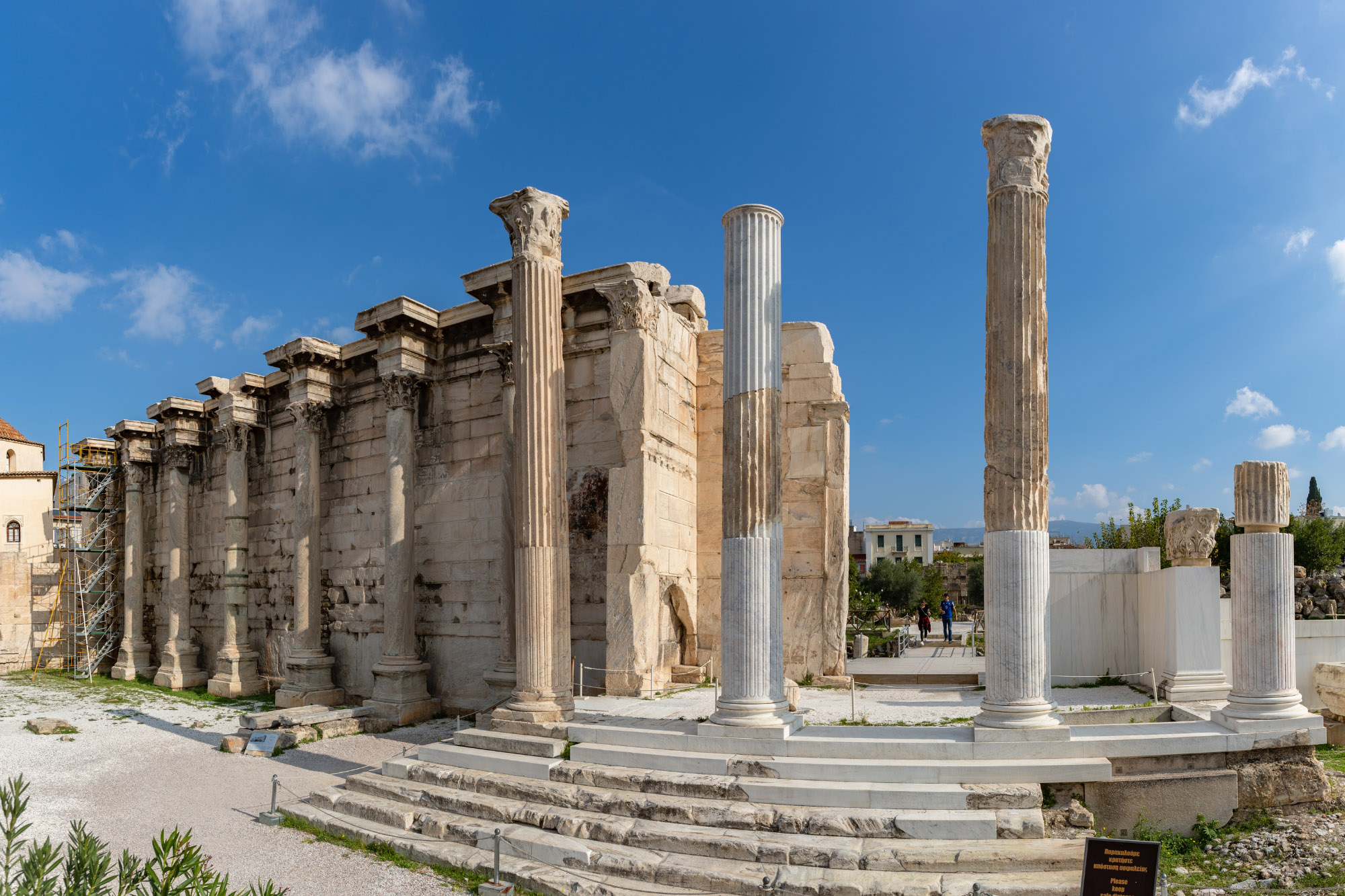
Set just north of the Ancient Agora and a short walk from the Acropolis, Hadrian’s Library offers a glimpse into Athens’ Roman-era transformation, when the city redefined itself again under imperial influence. Built in 132 AD by the Roman emperor Hadrian, the complex combined a library, lecture halls, open courtyards and collonaded porticos. This was a hub for learning, culture and public life. Today, only fragments remain. Part of the facade, Corinthian columns, a walled rectangle and the open courtyard. As you enter the site, you’ll be walking the same marble-paved yard that once hosted philosophers, scholars and the curious citizens of ancient Athens. Stand at the far western corner and look inward. Most people view the remains head-on. From the corner, the line of columns frames the inner courtyard in a way that hints at its original scale. You get a clearer sense of how monumental the entrance would have felt.