Discover what’s new before everyone else:

Get our free on-the-go Mediterranean hotspot map!

The Mediterranean

Trend watch: how frequency and energy are reshaping modern wellness

The rise of frequency-led wellness explained

Frequency is becoming one of the defining words in modern wellness. What if its rise comes down to a simple check-in: do you feel settled or out of rhythm in your body, your interactions or the environment around you? The term is gaining ground because people already register these shifts, even if they haven’t had the language for them. To understand why this tendency is emerging now, we travelled to Domaine du Rodier in southern France, where Mariana Loumiet, founder of wellness brand Vittoria Regia, hosted her first European retreat.
Table of Contents

Photography courtesy of Alex Brunet and Olga Varova

What does ‘frequency’ actually mean in modern wellness?

Wellness has picked up a new word. Frequency now appears on retreat menus and in the language of chefs, therapists and spatial practitioners. It has traction because it names something people already recognise: the sense that a setting either steadies them or scatters them. It describes alignment at the most physical level, when the body registers safety before the mind catches up.

A new word for an old instinct

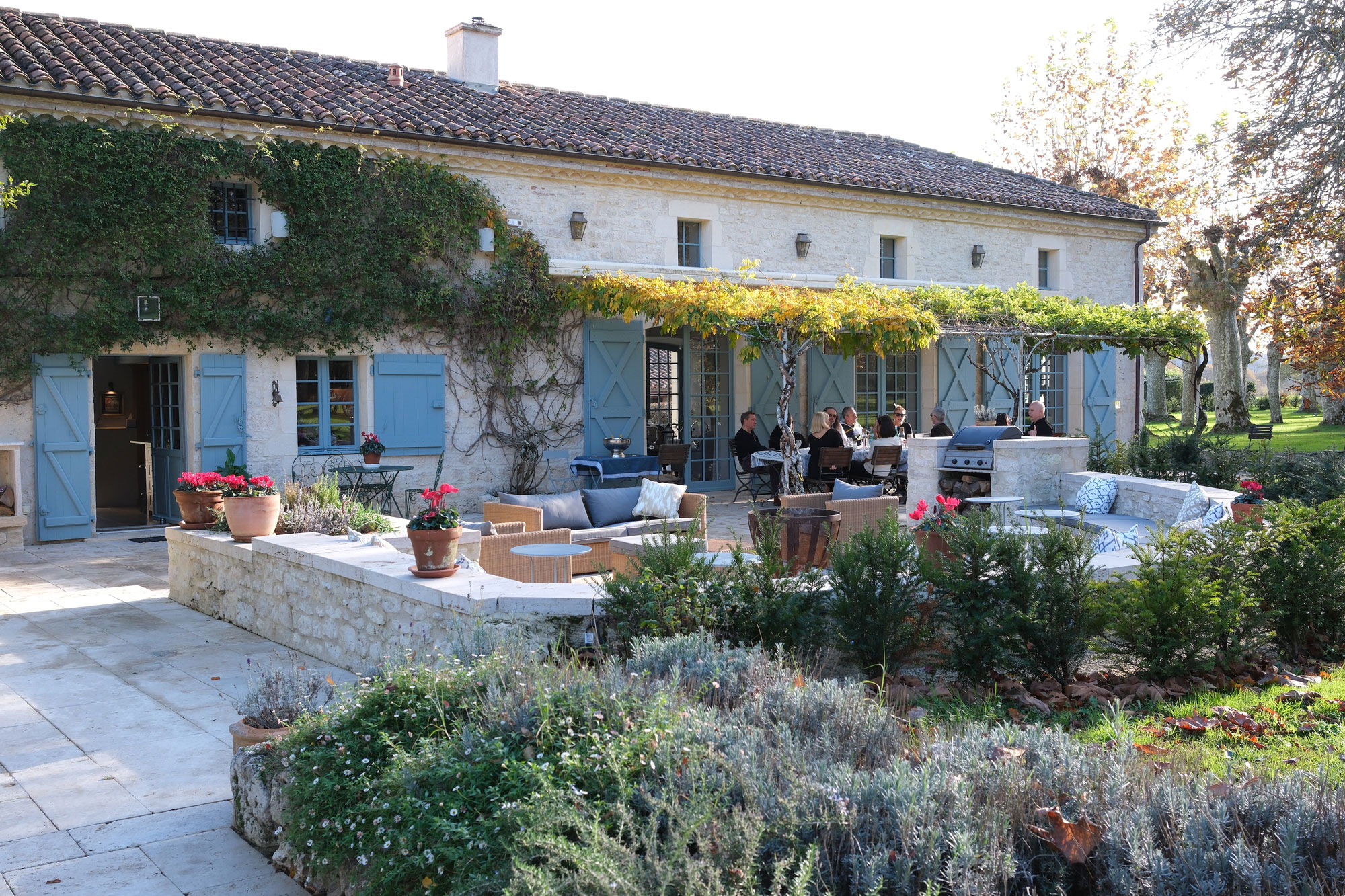
Few take this idea further than Mariana Loumiet, the Peruvian-born founder of wellness brand Vittoria Regia. Her background moves through luxury hospitality, retail design, PR and years of sensory healing work. She has led workshops for Soho House worldwide and built a following in the US and Latin America through private, invitation-only gatherings. Domaine du Rodier, a 19th-century estate outside Toulouse, was the setting for her first European retreat.

For Loumiet, frequency is literal. “Frequency is when I walk into a space and I just feel right … light … at home in my body.” She reads rooms the way others read people, tracing how sound, light, ingredients and land influence a person’s internal state. “Everything affects frequency – the music, the food, the ingredients, the lighting, the land.” When the base note holds, she says, the rest becomes possible. “If a space is in the right frequency, it’s half the battle.”

This emphasis on how environments behave aligns with a wider pivot in wellness. People want spaces that regulate the system without telling them how to feel. Much of traditional wellness still relies on programming, while frequency relies on atmosphere.

A clear demonstration

The idea made sense the moment we reached Domaine du Rodier, tucked into farmland south of Brive-la-Gaillarde. A long taxi ride through darkness and traffic ended at tall gates and a slow ascent along a gravel drive, the façade glowing in warm light. Inside, Loumiet greeted us and guided us toward a room where a fire burned, glasses clinked and conversation moved easily.

Nothing “began”, yet the weekend had already begun. The shift was immediate. It showed exactly what Loumiet means when she talks about frequency: architecture, landscape and human presence creating a baseline that allows people to soften on entry.

If frequency has entered the wellness vocabulary, it is because it gives shape to an experience people recognise but rarely articulate. It describes the cumulative effect of design, land and human presence without turning it into doctrine.

How does a retreat built around energy differ from a classic wellness weekend?

Across wellness, the centre of gravity is shifting. People are looking less for scheduled transformation and more for environments that steady them on arrival.

Energy-led retreats do not always follow a clear or explained programme. Guests can at times be expected to move through experiences partly on their own. Atmosphere, pacing and spatial cues replace a traditional structure, which can feel open but also require a high degree of self-navigation.

Place as the framework

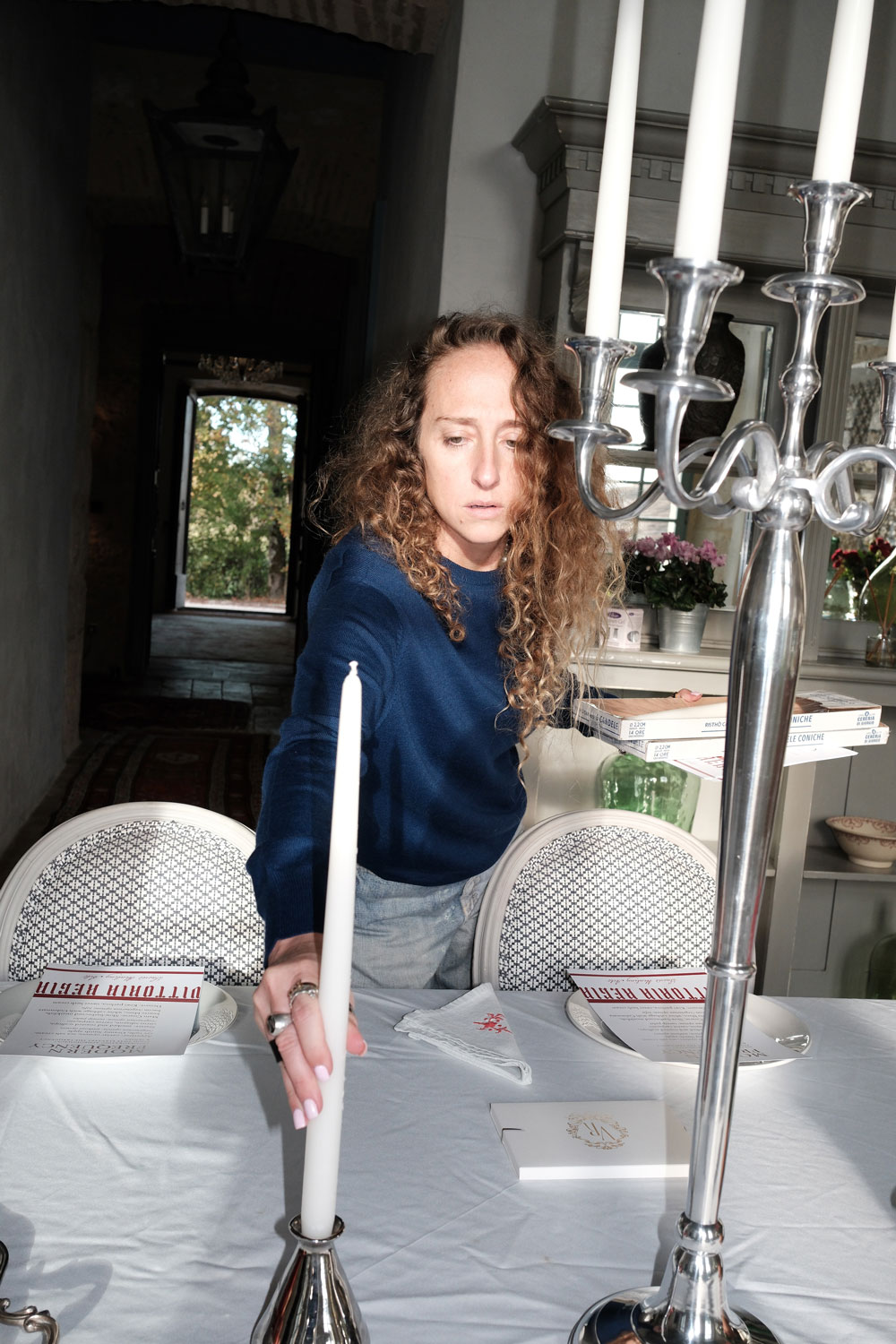
At Domaine du Rodier the distinction was immediate, with the property itself setting the flow. Evenings began in the salon with its fire and wide seating. Dinner unfolded in the long dining room, where Loumiet reset the table each night to alter the mood. Later, the lounge held nightcaps and ice-cream sundaes once the house had quietened. The next morning breakfast was taken in the late autumn sun before lunch was served under the pergola.

During our retreat, the sequence felt lived, more like a gathering shaped by place than a retreat defined by programming.

A shift in wellness culture

This approach mirrors a wider change. Many retreats still repeat established formulas, but a younger movement is designing weekends around emotional cadence. Atmosphere has become the primary tool and Loumiet works inside this space. “If something’s off, you’ll feel anxious even if you don’t know why.” She begins by stabilising the environment so nothing jars. “I choose everything from my heart – every detail has to feel right.”

Her view of programming is expansive. “Self-care retreats are regurgitating the same thing … I want each experience to be completely different.” She sees each gathering as multi-dimensional – physical, emotional, mental, energetic – and uses collaborators, spaces and sensory shifts to keep the weekend responsive rather than repetitive.

Why are places like Domaine du Rodier becoming hubs for this type of work?

Energy-led retreats rely on environments that can hold attention without demanding it. Across wellness, this emphasis on space is growing. People want rooms that regulate, land that feels settled and architecture that lets them exhale before anything begins.

Loumiet describes the ideal entrance as “the sensation of walking into a portal and leaving the noise behind.”

A house that shapes attention

Domaine du Rodier sits across lawns, terraces, gardens and woodland, with interior rooms that change in height, light and acoustics. Moving through them adjusts a person’s state almost unconsciously. These small shifts accumulate and form a kind of internal map. Guests settle because the building offers a structure that keeps the nervous system steady.

Loumiet is always on the lookout for places that behave this way. “I look for land that still has energy to give.” She reads buildings as emotional instruments, searching for settings that can support the work without forcing it.

Frequency as a physical condition

For Loumiet, beauty is “a tangible representation of the divine” and an organising principle. She chooses spaces where this is evident in detail, proportion and atmosphere. “Spaces should create a shift into a higher vibrational state.”

In this context, frequency becomes something physical: access to space, air and quiet, and the sense that a house can hold its shape while allowing guests to soften into it.

How do food and drink shape your state of mind at a retreat like this?

Across wellness, food is moving into the realm of mood design. At energy-led retreats, it becomes part of the emotional structure rather than only nutrition. During our stay, the two local female chefs Ombeline Treich and Madrid Segal worked under Loumiet’s direction, treating flavour, texture and pacing as tools that shaped how people related, listened and stayed present.

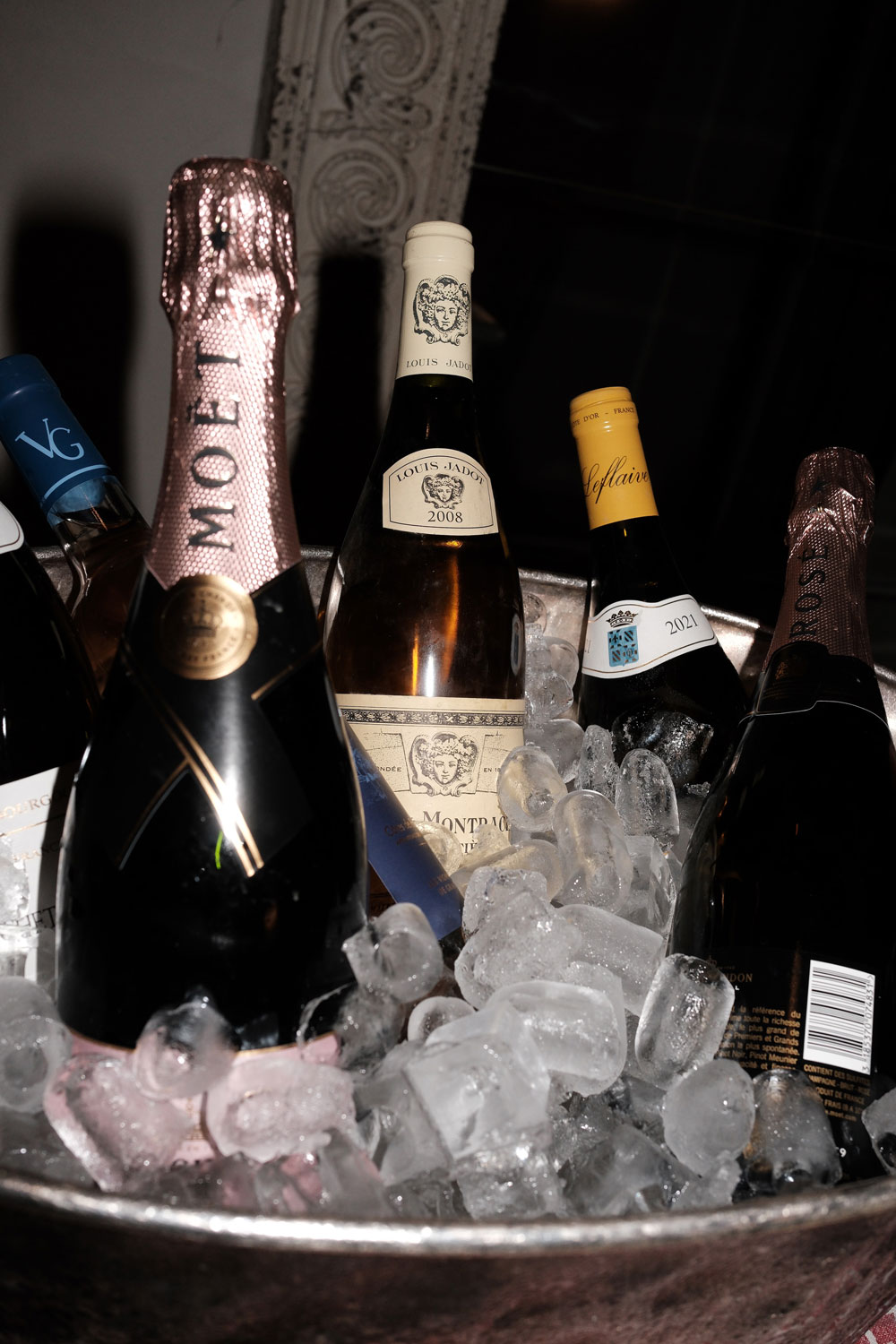
Loumiet is explicit about this. “Food and drink are everything, they shape the entire experience.” She sees each meal as a moment that can adjust the group’s internal state. Family-style serving, heat, softness, acidity, even the weight of the wine all form part of the arc.

Meals that recalibrate

Dinner on the opening night set the tone. Warm colours on the table, shared plates, spice, heat and subtle flavours arriving in rhythm. The room responded immediately. People who had never met fell into a pace that matched the dishes.

The following day lunch served a different purpose. The previous evening had run long and many guests arrived tired. The meal under the pergola answered that directly. Bright flavours, cucumbers, herbs and lighter textures created lift without effort. White wine carried the mood without dragging it. Loumiet had described this kind of moment as a shift in gear. “It’s a symphony … warmth, euphoria, revitalising lightness.”
Evening tempo

That night, the dining room changed again. The tablescape was intimate, the pacing slower, the menu aligned with what Loumiet described as aphrodisiac food – dishes that keep people alert and engaged without heaviness. She pays close attention to timing. “I channel the timing of meals so people are awake and receptive.”

What role does group energy play in this kind of gathering?

The social dimension is expanding. Retreats are no longer designed only around individual practice. People want collective formats that feel safe, attentive and unforced. Energy-led gatherings respond to that demand by treating the group as part of the environment, not a separate layer.

Reading the room

Throughout the weekend Loumiet observed the group closely. “I sense what’s in or out of alignment like a puzzle.” Seating changed from meal to meal. Couples sat together at some points and apart at others. These were subtle shifts, small adjustments in proximity that altered the direction of each dinner without breaking its flow. “Certain people balance others – strong personalities need softer energies.”

Her intention was clear: create combinations that support ease rather than performance. Loumiet believes this begins with her own steadiness. “Trust begins with my own energy and intention.”

Shared sessions

Much of the group dynamic formed through the sessions led by Max Strom, the American breathwork teacher known for emotional respiratory work and the TED talk ‘Breathe to Heal’. His slow, continuous breathing sequences brought the room into a single pace.

One of Strom’s sessions involved visualisation. At one point several guests grew still, some tearful, others quiet and inward.

A different kind of exercise

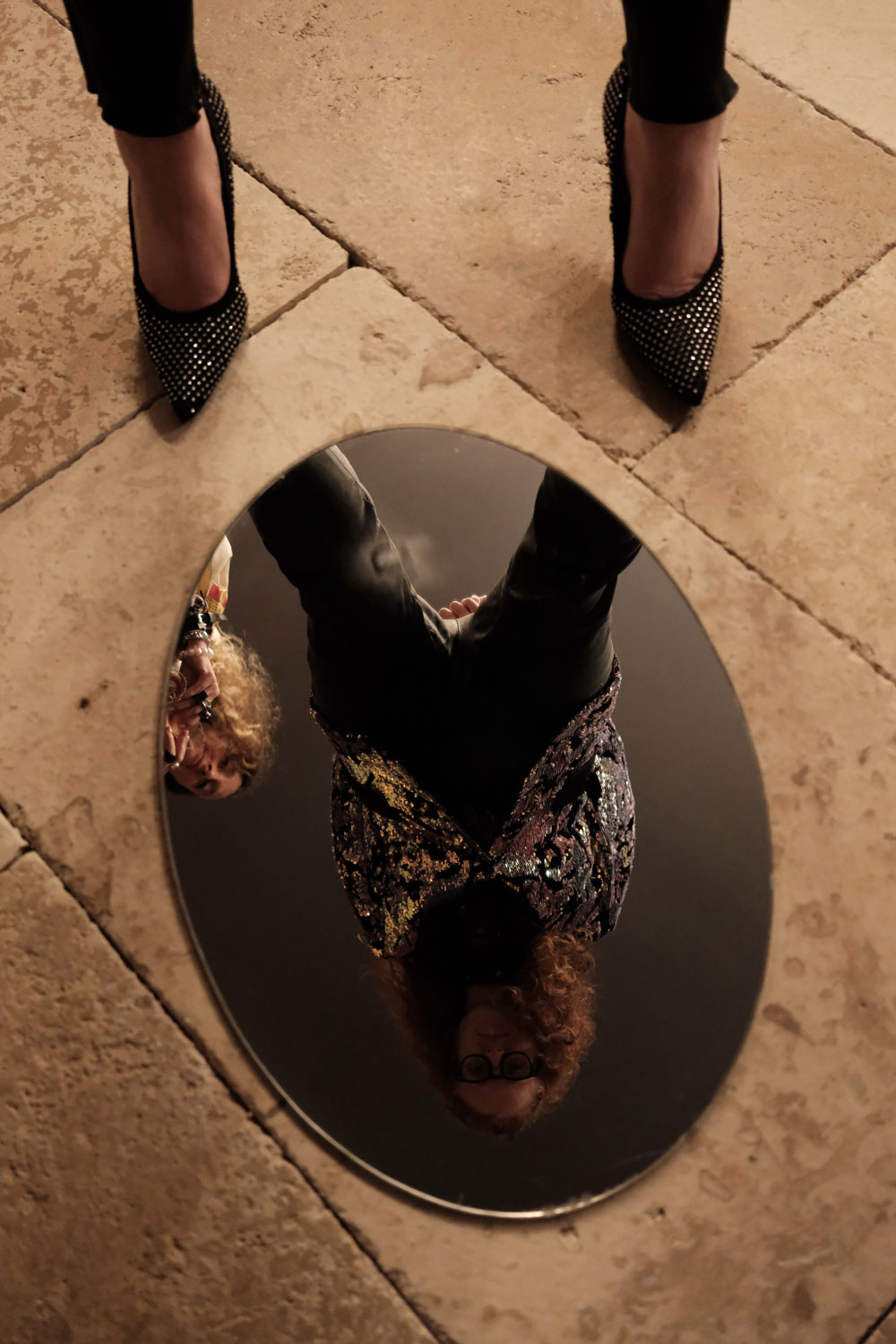
One evening Loumiet arranged an installation named ‘The House of Garnet’ in one of the spaces using a series of objects placed around the space – a low mirror, a tall sculptural form, a ceramic work and several other pieces. Guests moved through the room at their own speed, stopping at the pieces that drew their attention. It functioned as a kind of self-exploration, open to interpretation, shaped by whatever each person brought into the space.

During our stay, it became apparent that not every shift in dynamic was easy to read. Energy-led formats rely on instinct rather than instruction, which can feel freeing for some and disorienting for others.

Why are people turning to this more experiential, feeling-driven approach now?

Across wellness a change is underway. Many people describe a kind of ongoing depletion that standard self-care no longer answers. Burnout has become ambient. High performers speak about loneliness even in relationships, families or teams. The culture rewards constant output but gives little space for emotional coherence. As a result, the idea of an environment that steadies you, rather than a programme that fixes you, is gaining traction.

The appeal of emotional environments

Loumiet sees this shift clearly in her work. “People want to connect deeper, to feel calmer, better in their space.” For her, wellness now moves along two tracks at once: the external demands of daily life and the internal conditions that allow someone to remain present within them. She describes this as entering the “energetic world” – not as mysticism but as the layer of experience that determines whether a person feels open or withdrawn.

Her retreats respond to this appetite for depth and sensory richness. Guests want weekends that feel lived. They want design, food, sound and pacing to carry them without needing explanation. They want settings where their internal rhythm can catch up to their public one.

The rise of energy-based language reflects both a cultural appetite for depth and the uncertainty that comes with practices still defining themselves.

A response to high-performance culture

In her sessions with clients Loumiet often meets people who operate at full capacity yet rarely feel understood. “High performers need to feel they’re not alone.” Many describe the difficulty of relaxing without losing their edge. The draw of an experiential retreat lies in the coherence it offers: architecture that regulates, meals that support attention and a group dynamic that allows for presence without pressure.

Thinking beyond weekends

Loumiet’s long-term plans for Vittoria Regia extend this idea. She imagines a series of elemental houses – water, fire, earth and air – plus a fifth that unites them. Each would hold a distinct emotional register, with a membership structure offering ongoing access. The concept mirrors a wider cultural mood: a desire for continuity rather than intermittent repair. As Loumiet puts it, “People want to connect deeper,” and they want spaces where that connection can hold.

Share this

You might also like
Book your stay in the Mediterranean

Stay in the know

Sign up for the latest hotspot news from the Mediterranean.

Currently most read

The 2026 hot list: the 10 best new hotels in France, Greece, Italy, Portugal and Spain

Mediterranean tastemakers

My Mediterranean, as told by Daniela Franceschini

My Mediterranean, as told by Nikos Karaflos

My Mediterranean, as told by Alexandra Manousakis

Freebie!

Get our free Mediterranean hotspot map